
Kapsch World as a place for history

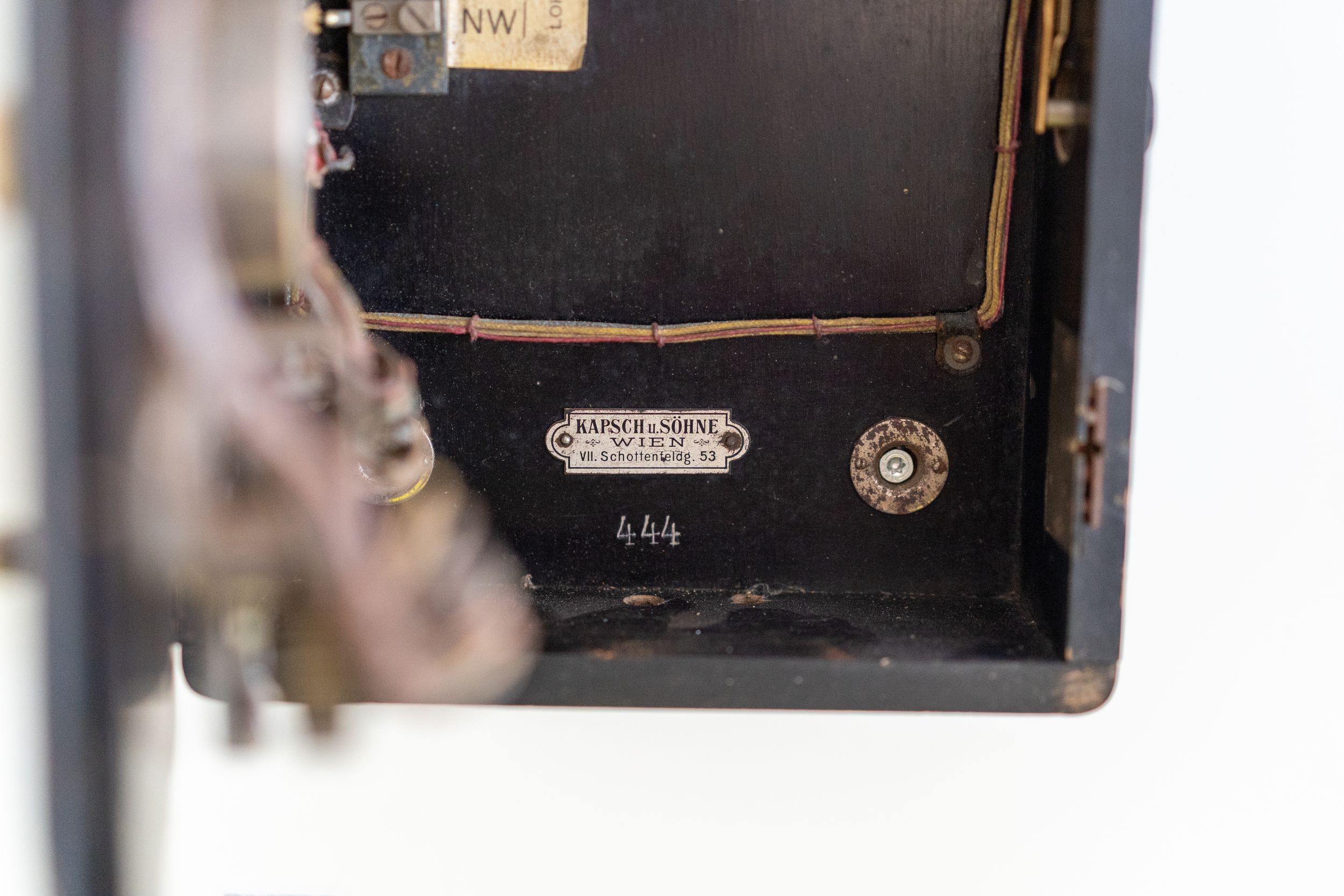
The company founder, Johann Kapŝ, is born in March 1845 in a village in Gottschee, a German-speaking enclave in Carniola (now Slovenia), as the son of a farmer. As a young man, he moves to Vienna to begin an apprenticeship as a mechanic. In 1871, he changes his name to Kapsch and marries Theresia Panzer. In 1892, he founds his own mechanical workshop at Schottenfeldgasse 53, supported by his sons Johann, Josef and Karl.

In 1904, the company, which had been successful from the outset, is renamed Kapsch u. Söhne, and in 1913 a new factory for telephone, telegraph and precision instruments is opened in Altmannsdorf. In 1916, the company is converted into a public limited company. In 1921, after 29 years at the helm of the company, Johann Kapsch dies at the age of 76.

Continued by his sons, the company expands into the radio business and in 1927 opens a second factory. During the Second World War, the company is an important supplier of radio technology to the German Armed Forces. After the war, the family and employees set about rebuilding the almost completely destroyed company.

In the 1950s and 1960s, the company flourishes, growing and expanding into new areas of business. Georg Kapsch, the great-grandson of the founder, joins the company in 1982 and becomes a member of the Management Board in 1989. In 2022, his son Samuel Kapsch joins the company and is appointed to the Management Board in April 2025. The family Kapsch has now led the company for over 130 years and five generations.

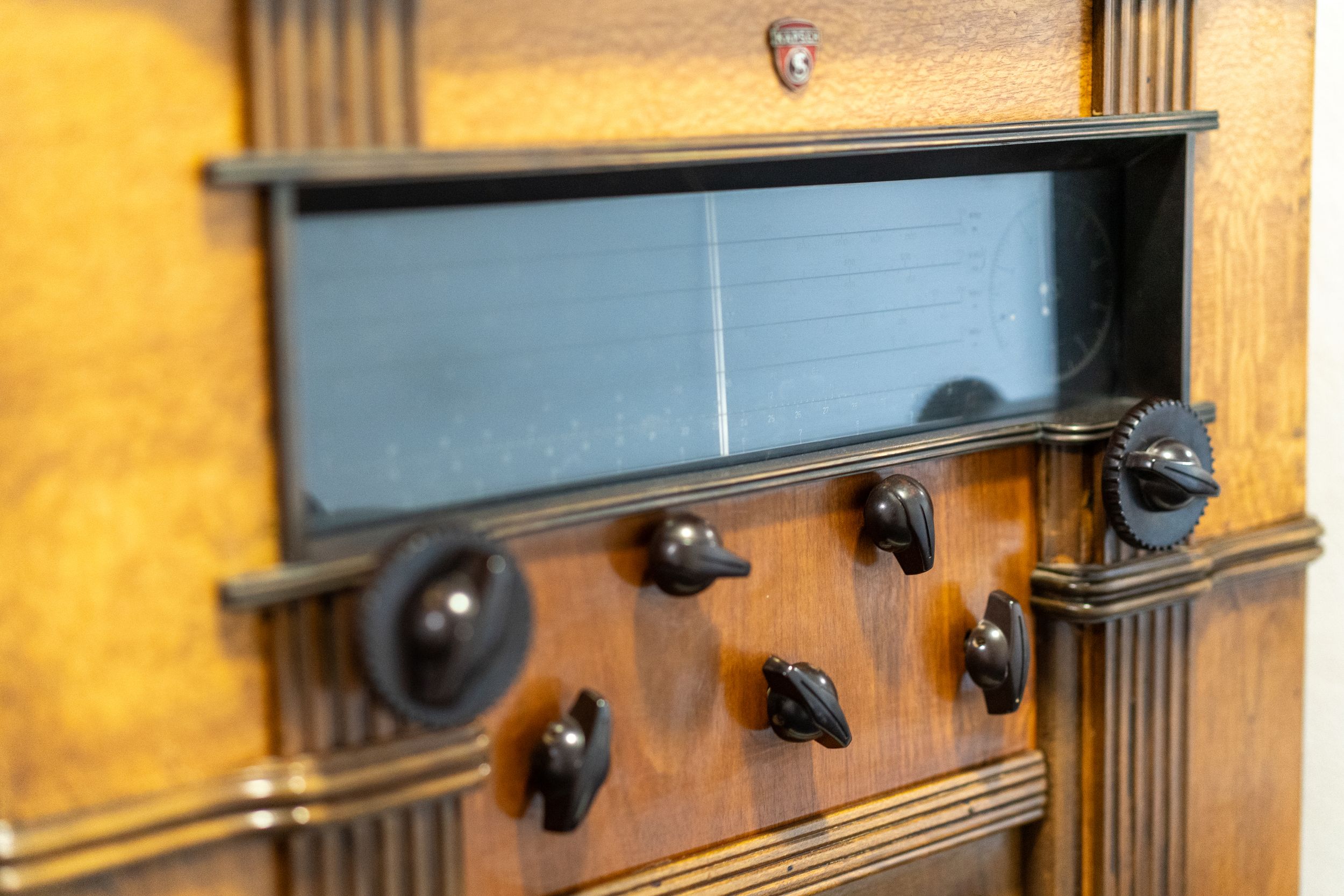
Radio-Phonographs

DSC00032

Prototype of a Radio-Phonograph combination

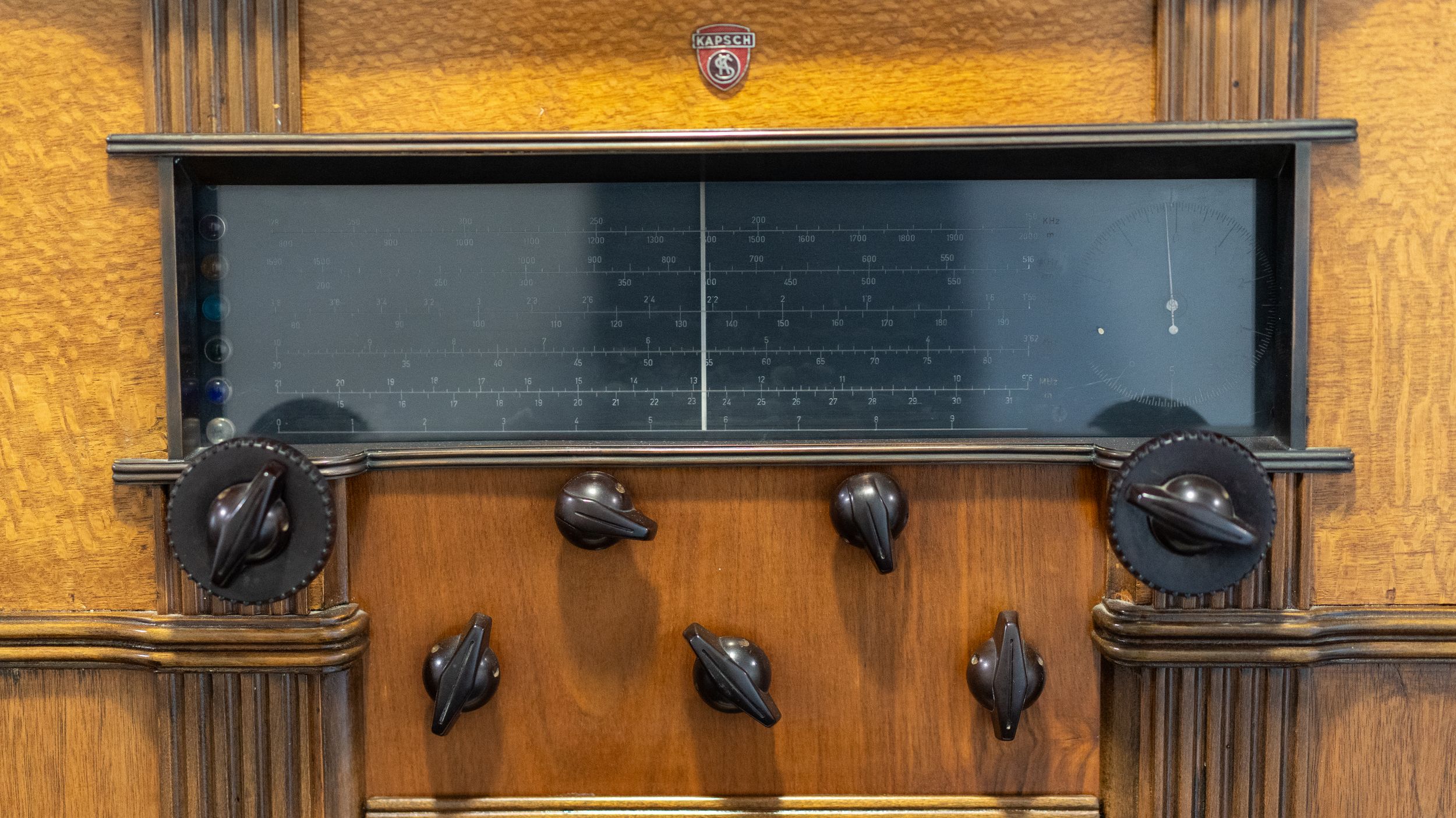
This prototype was developed by Karl Kapsch jun. and Josip Slišković. The device has eleven tubes and features a so-called “concert speaker”, a record player with three speeds and a timer with a 24-hour display. Since the production costs were very high, only one prototype was made.
DSC00038

Radio-TV-Phono Set

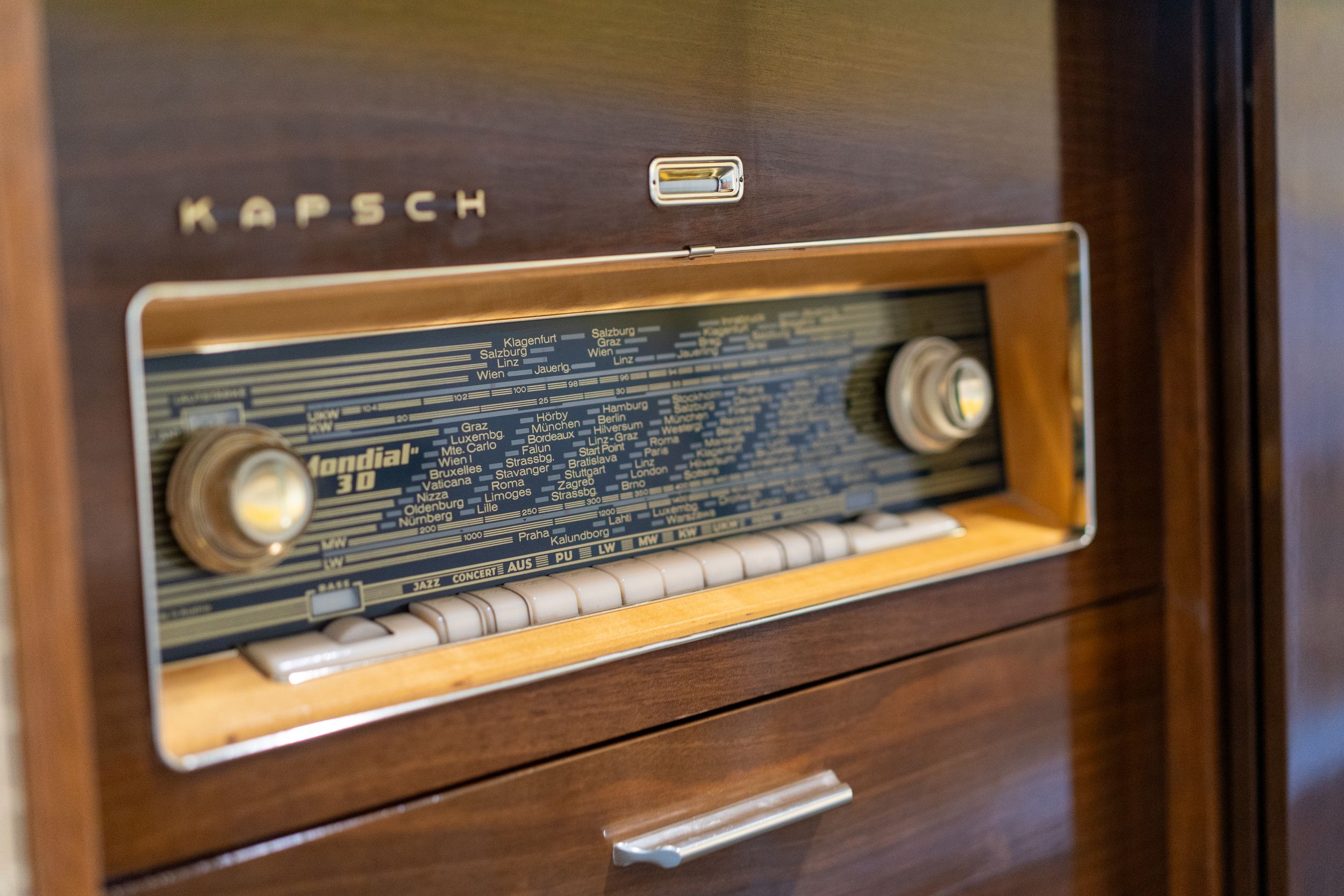
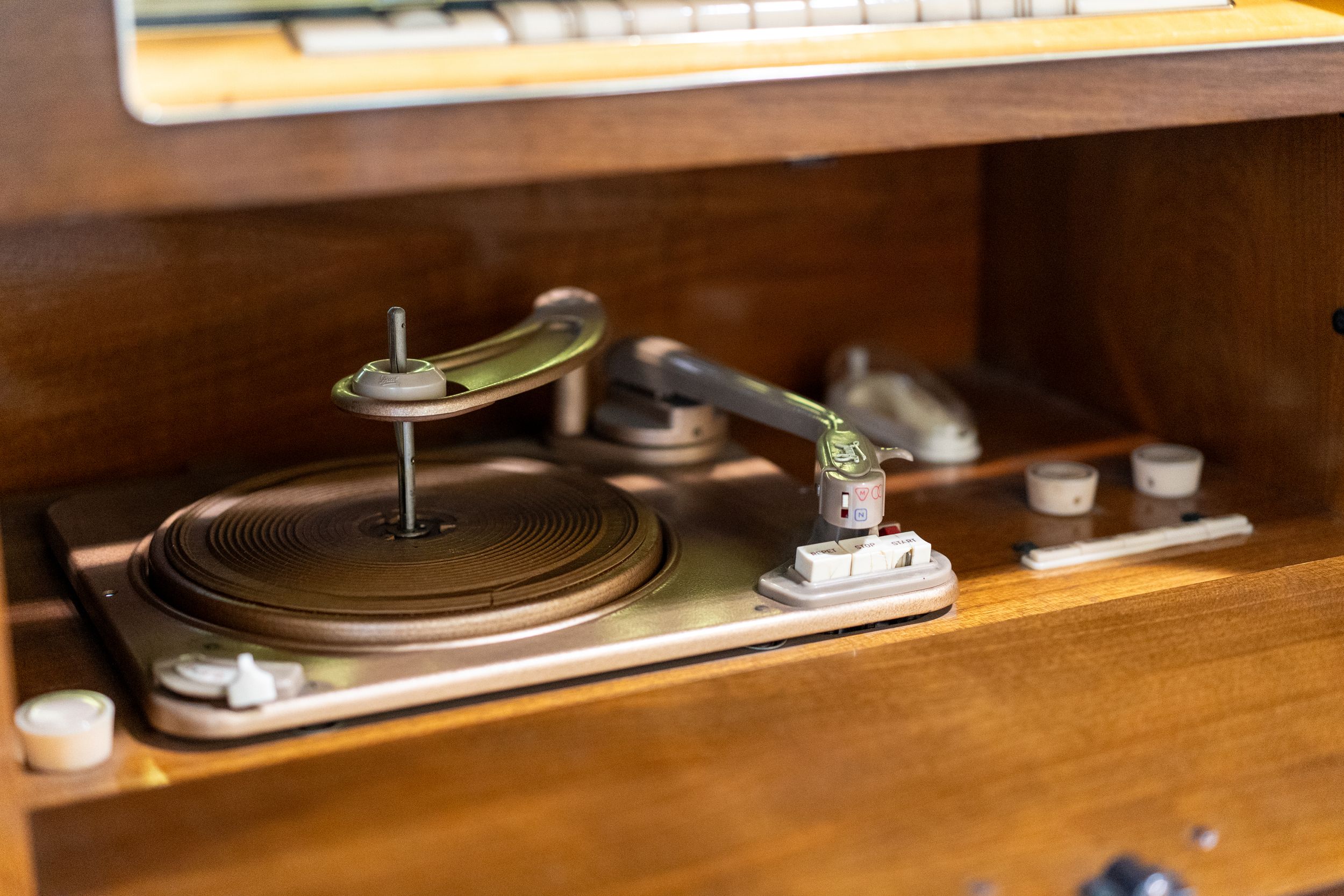
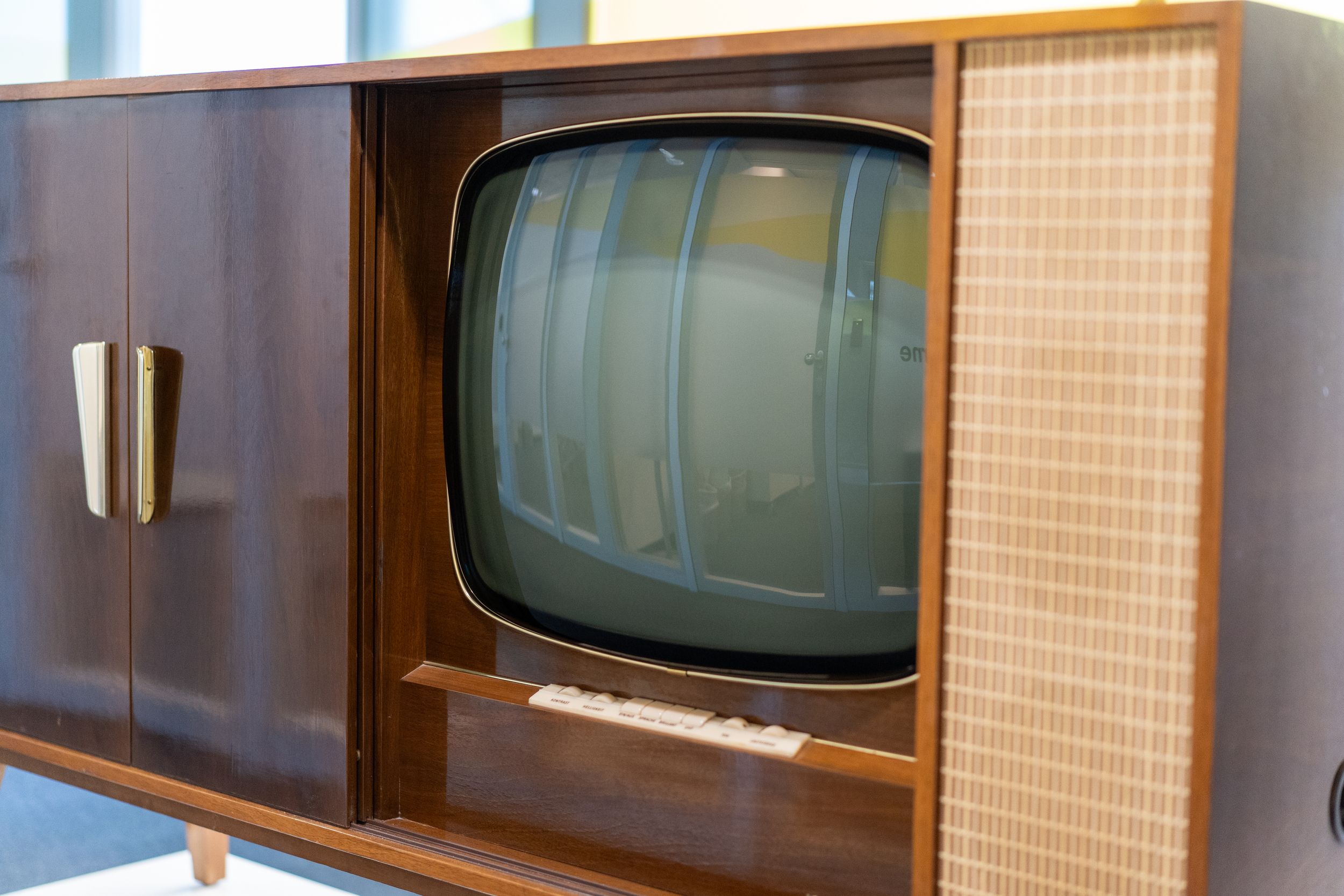
This set consists of a radio (Mondial 3D), a television (Prominent-Automatic), a DUAL record player with a record changer and four speeds, and six loudspeakers.

Radios

DSC00002

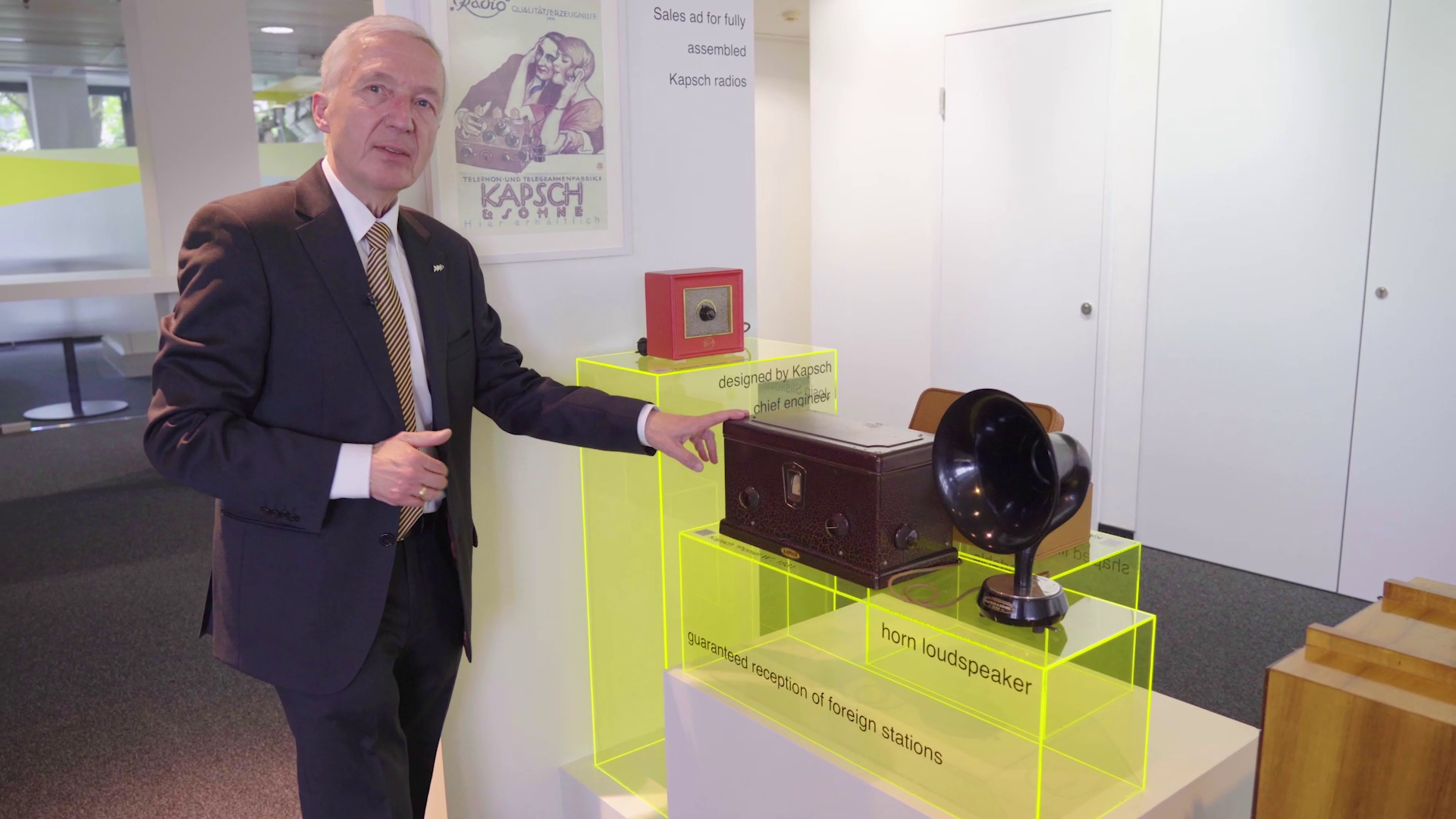
Kapsch "Pionier W"

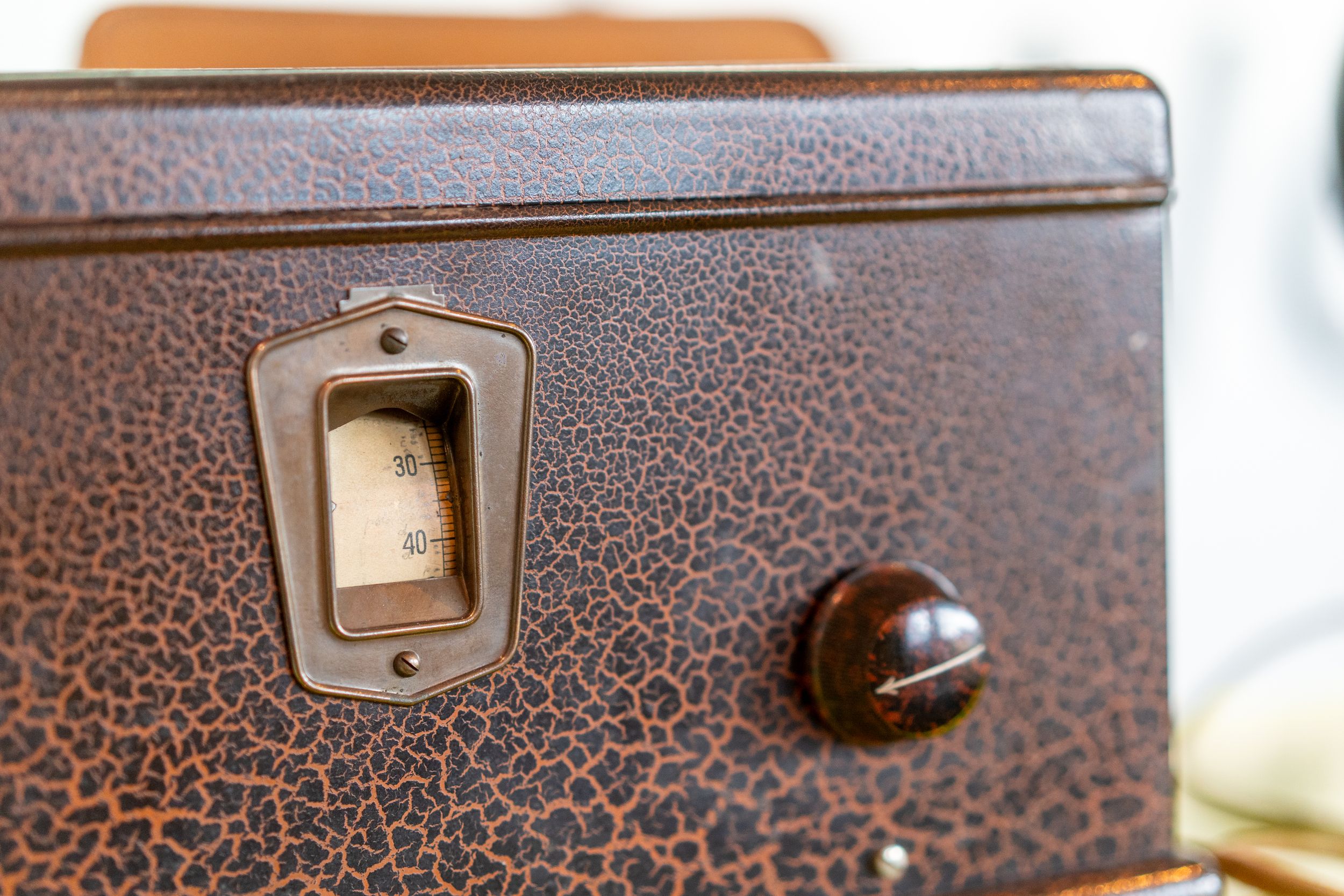
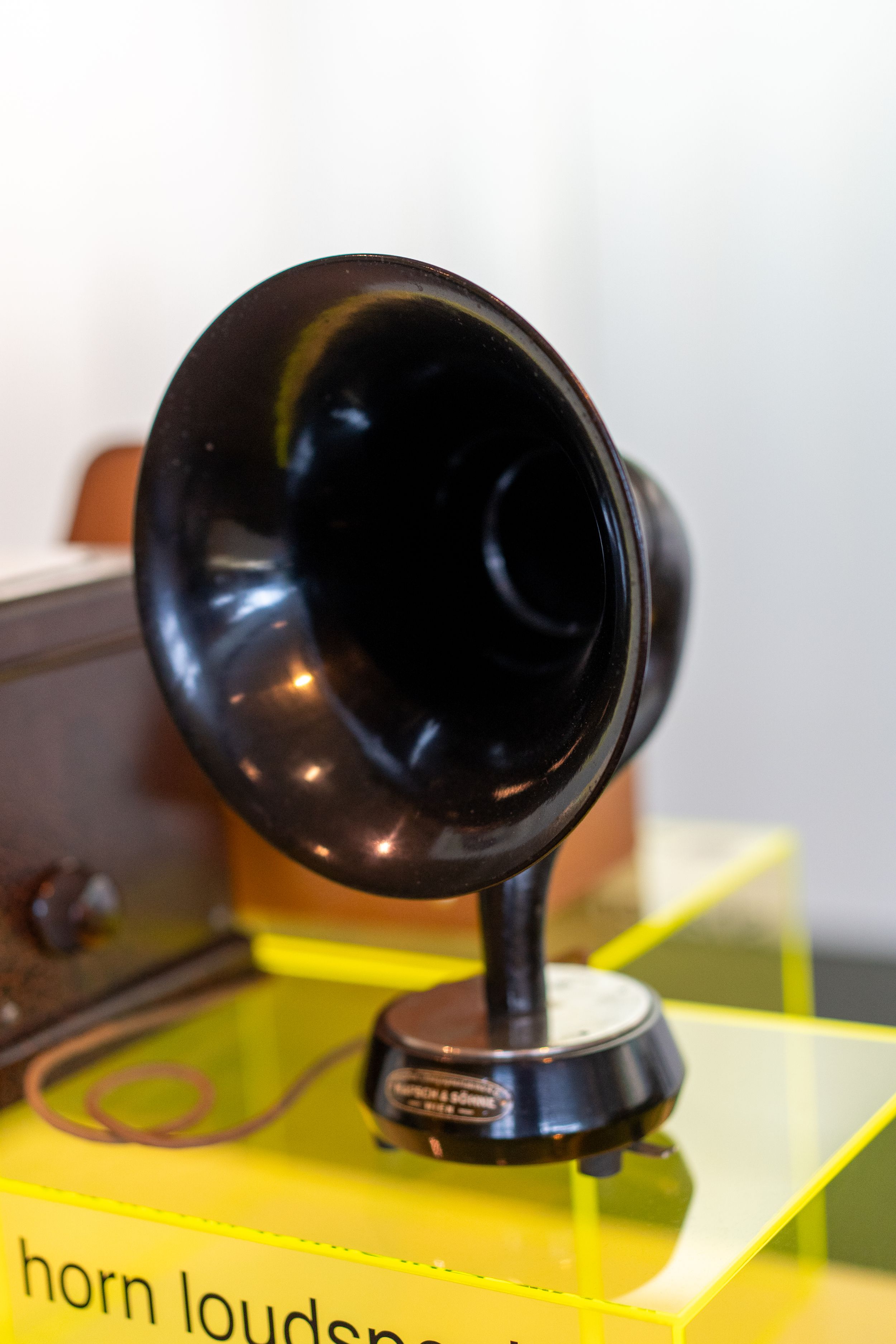
The three-tube screen grid long-range receiver offered guaranteed reception abroad, even in the vicinity of a strong local transmitter. It includes a calibrated drum scale and a connection for playing records. The small funnel loudspeaker dates from 1924 and was produced in ten thousand units.
DSC00054-2

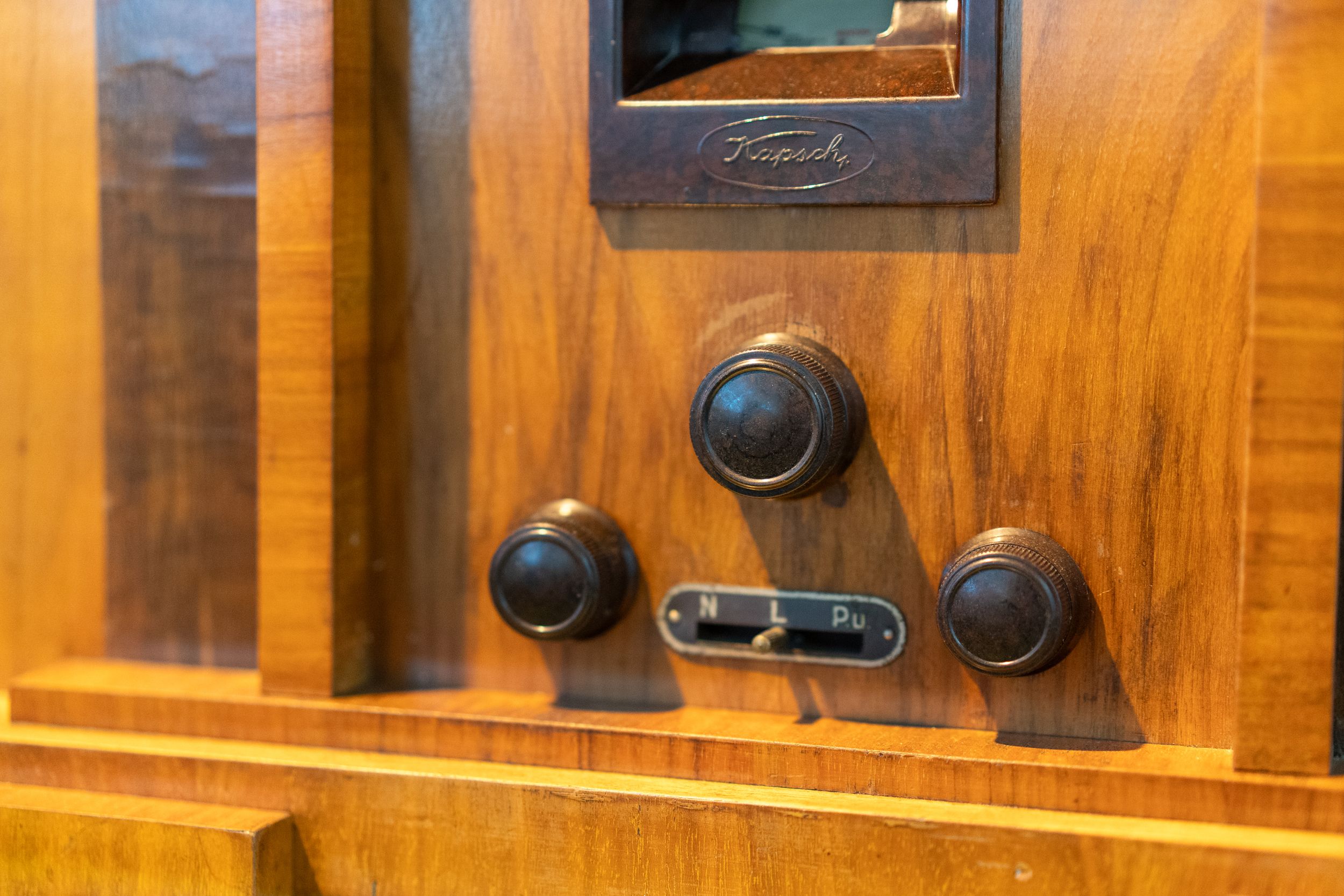
Kapsch "Regent"

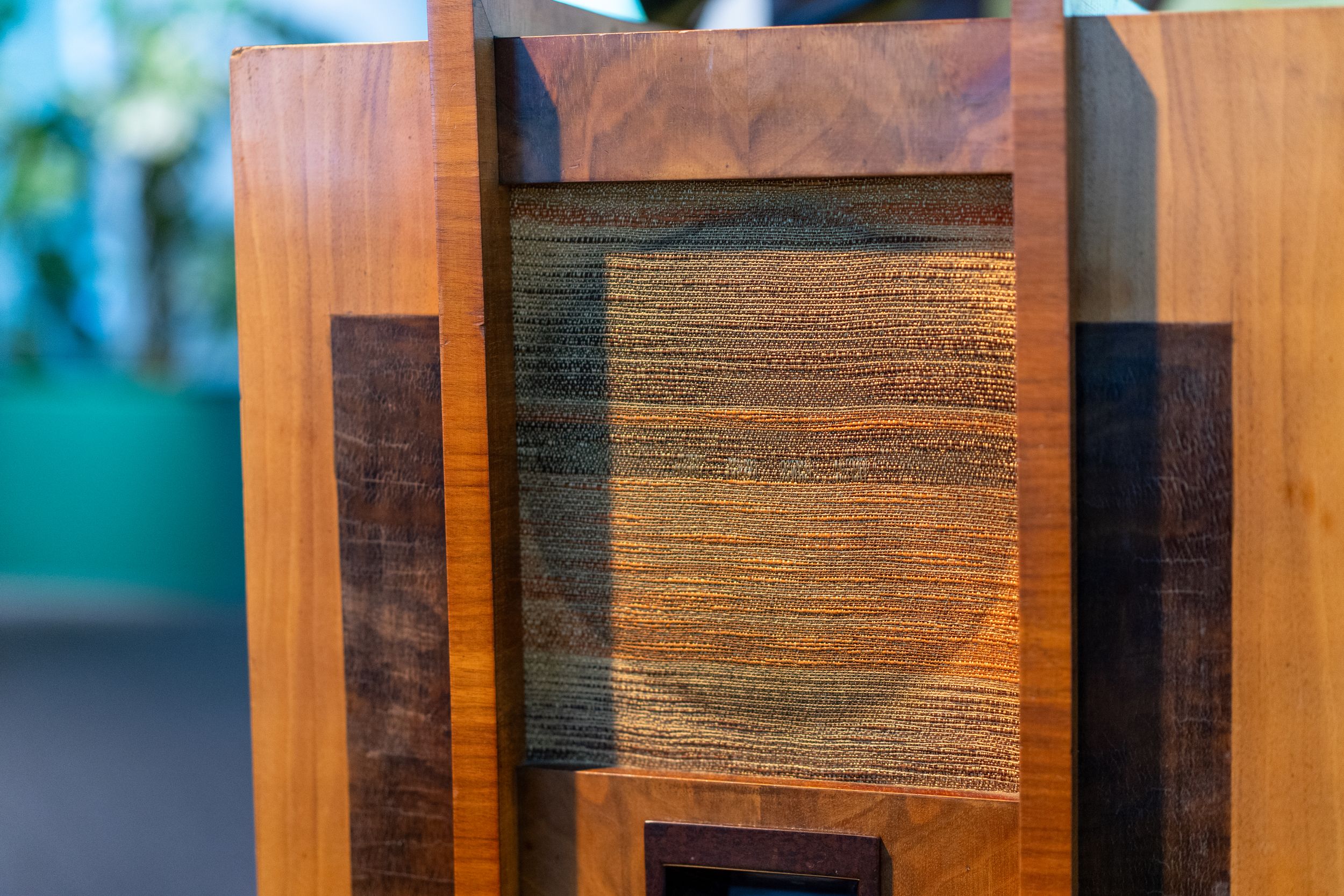
The “Regent” is a 5-tube super with fading compensation, i.e., the different volumes of the received stations were equalized. The radio has an elegant wooden cabinet and a built-in pointer instrument for “silent” tuning.
DSC00013

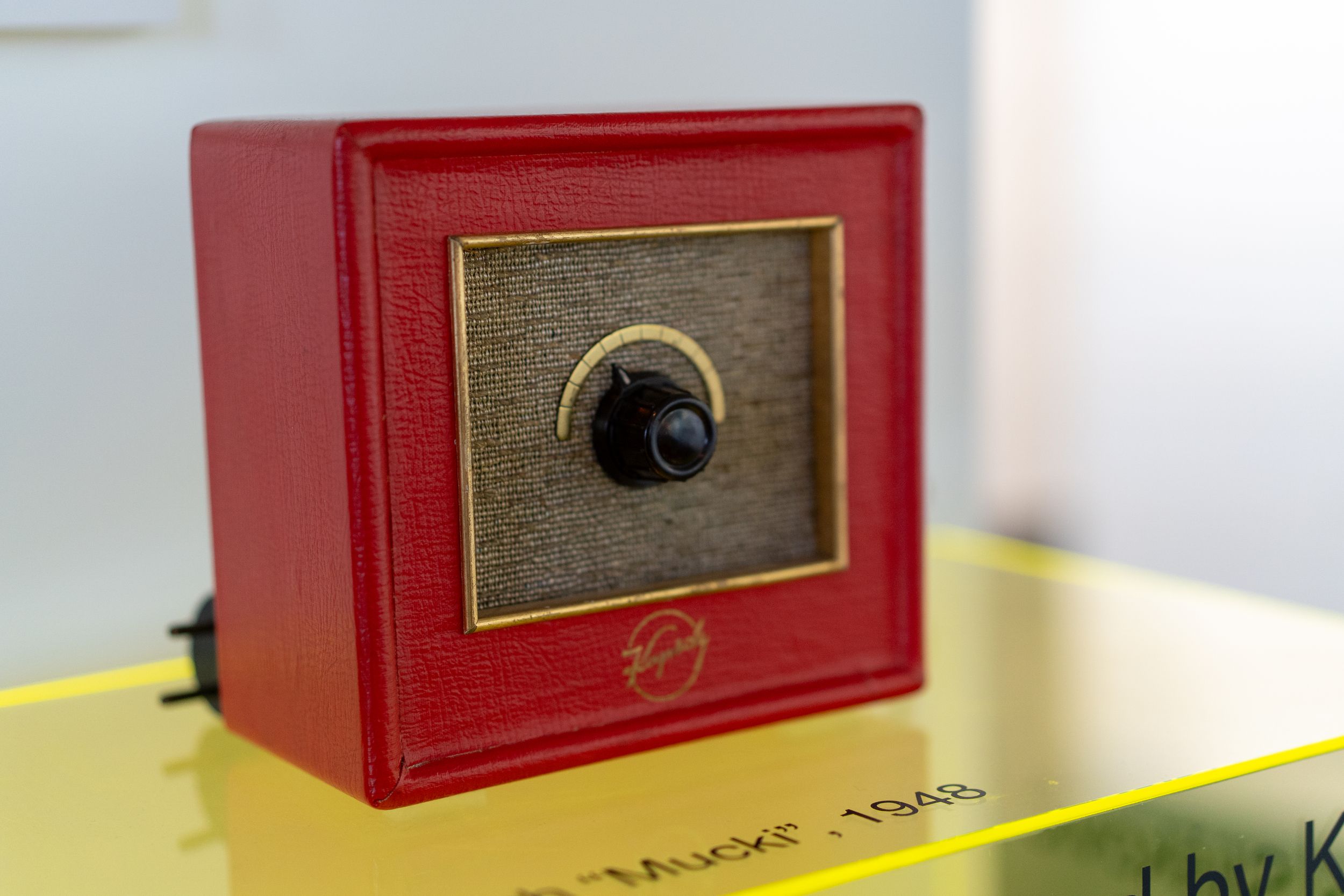
Kapsch "Mucki"

The “Mucki” was a typical design by Kapsch chief engineer Josip Slišković. He had been involved in the miniaturization of radios since the beginning of the radio movement in Austria. The device was available in brown, red, green, or blue.
DSC00017

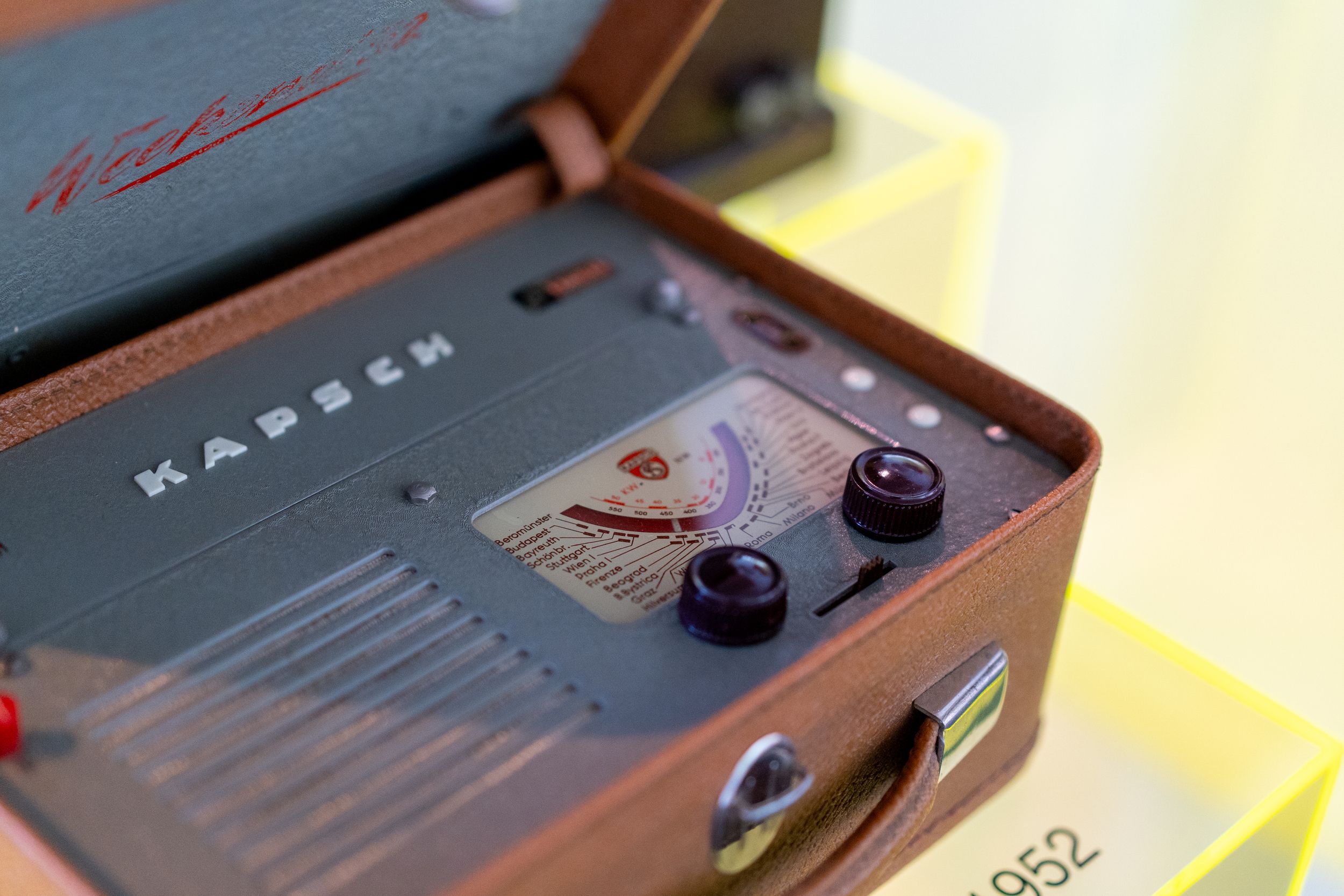
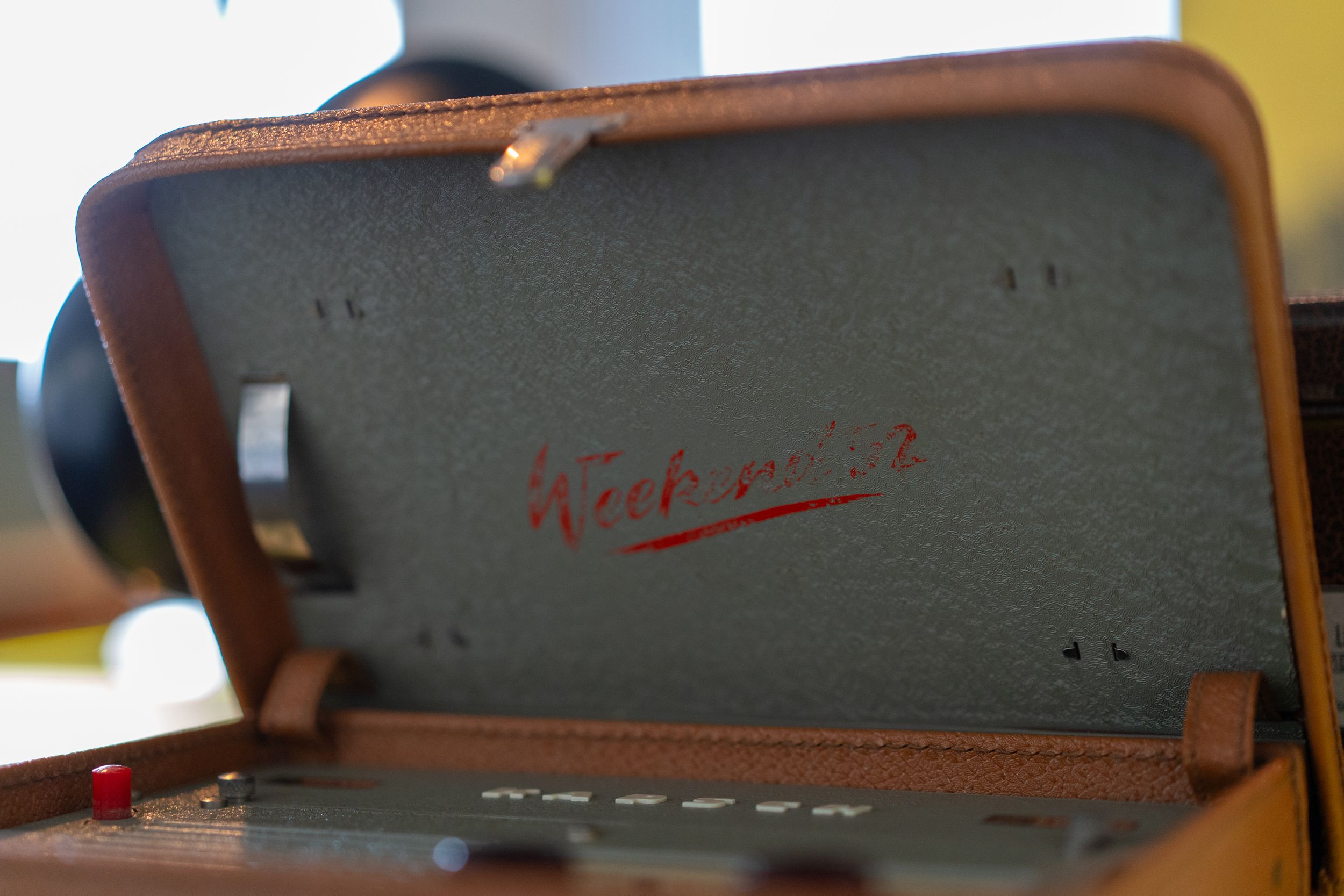
Kapsch "Weekend 52"

The portable battery-powered radio was great for travel, excursions, beach, and sports was offered in the colors light pigskin, Moroccan red or lizard gray. Opening the cover of the suitcase turned the radio on, closing it turned it off again.
DSC00030-5051x3328

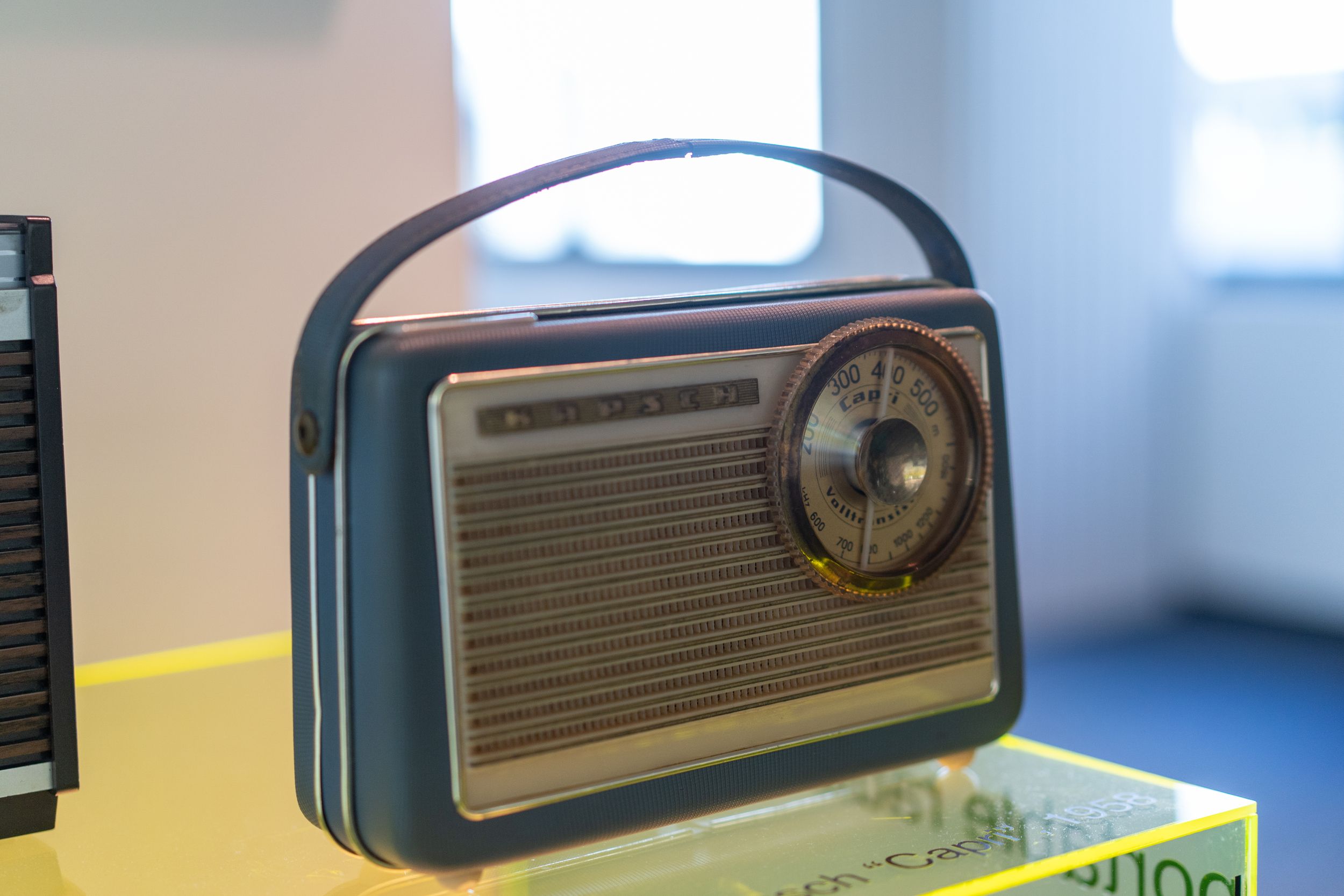
Kapsch "Capri"

Transistors revolutionized radio design. “Capri” was the first fully transistorized portable radio produced by Kapsch. Only two batteries were needed for 300 hours of operation.
DSC00019

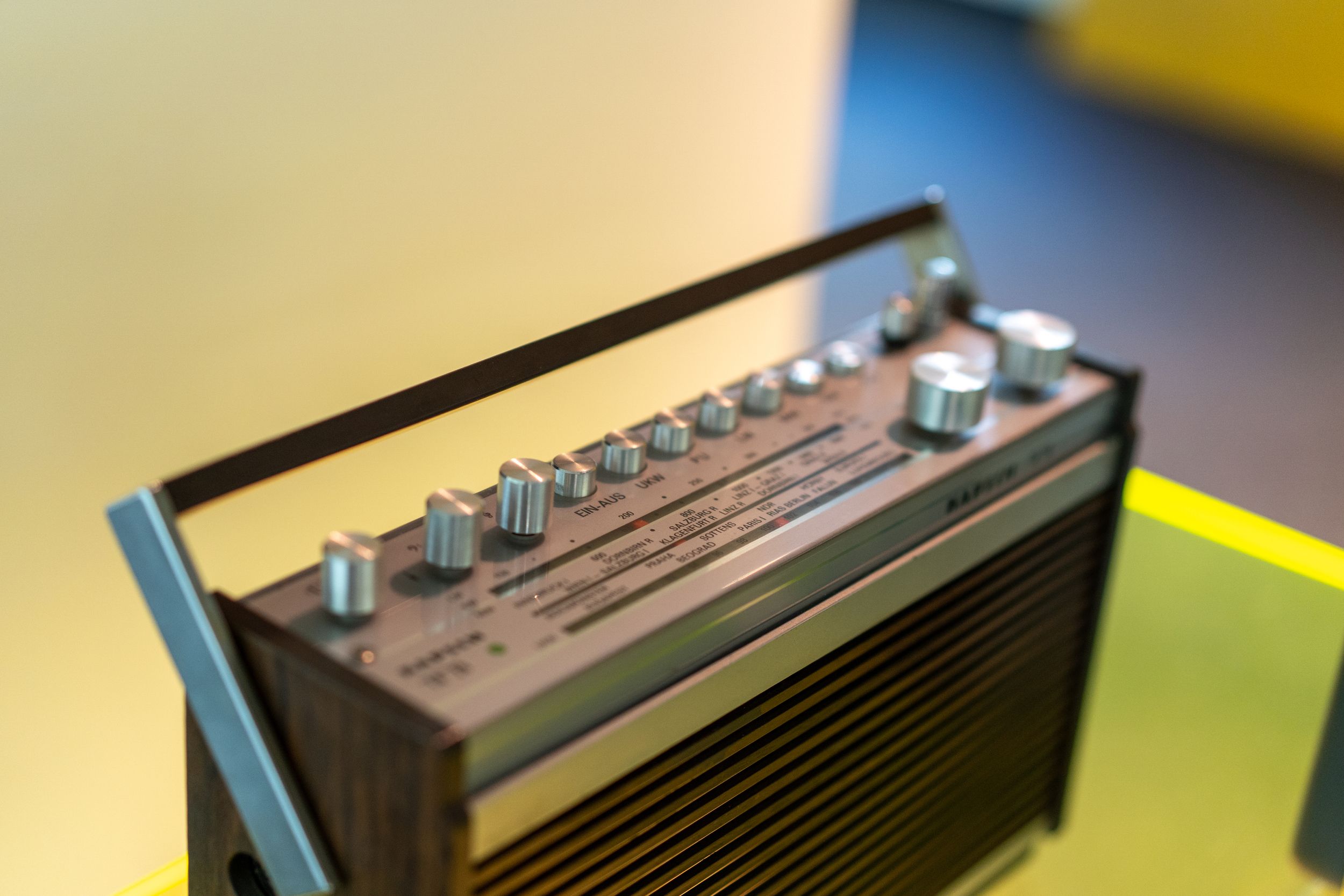
Kapsch "TR 20"

This transistor radio has separate tuning for AM and FM and is equipped with a distinct button for Ö3 (Austrian radio station) and switchable dial illumination. The “TR 20” is one of the last products in the radio sector to be manufactured by Kapsch itself and remained in the product range until 1977.

Telegraphy and Telephony

DSC09976

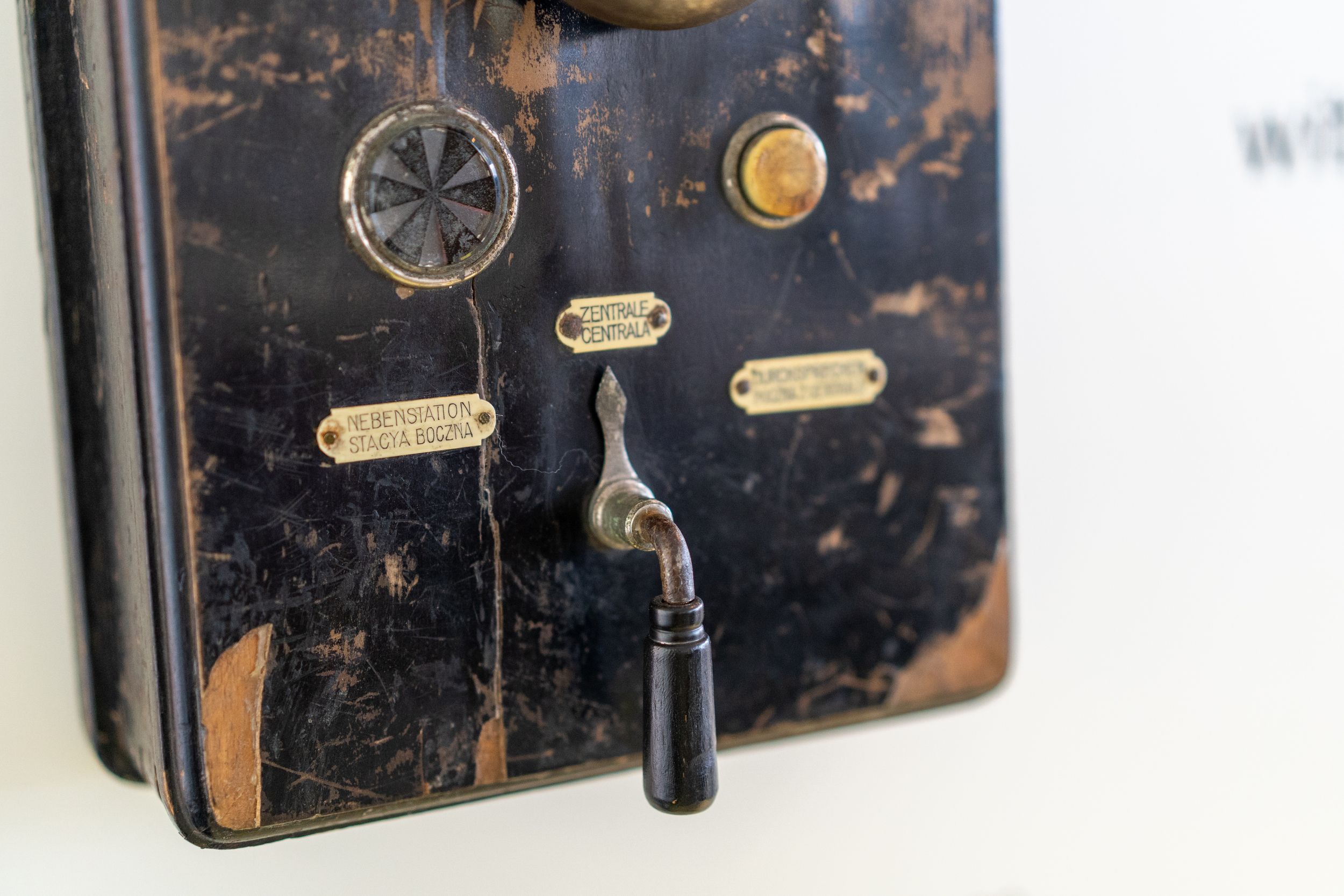
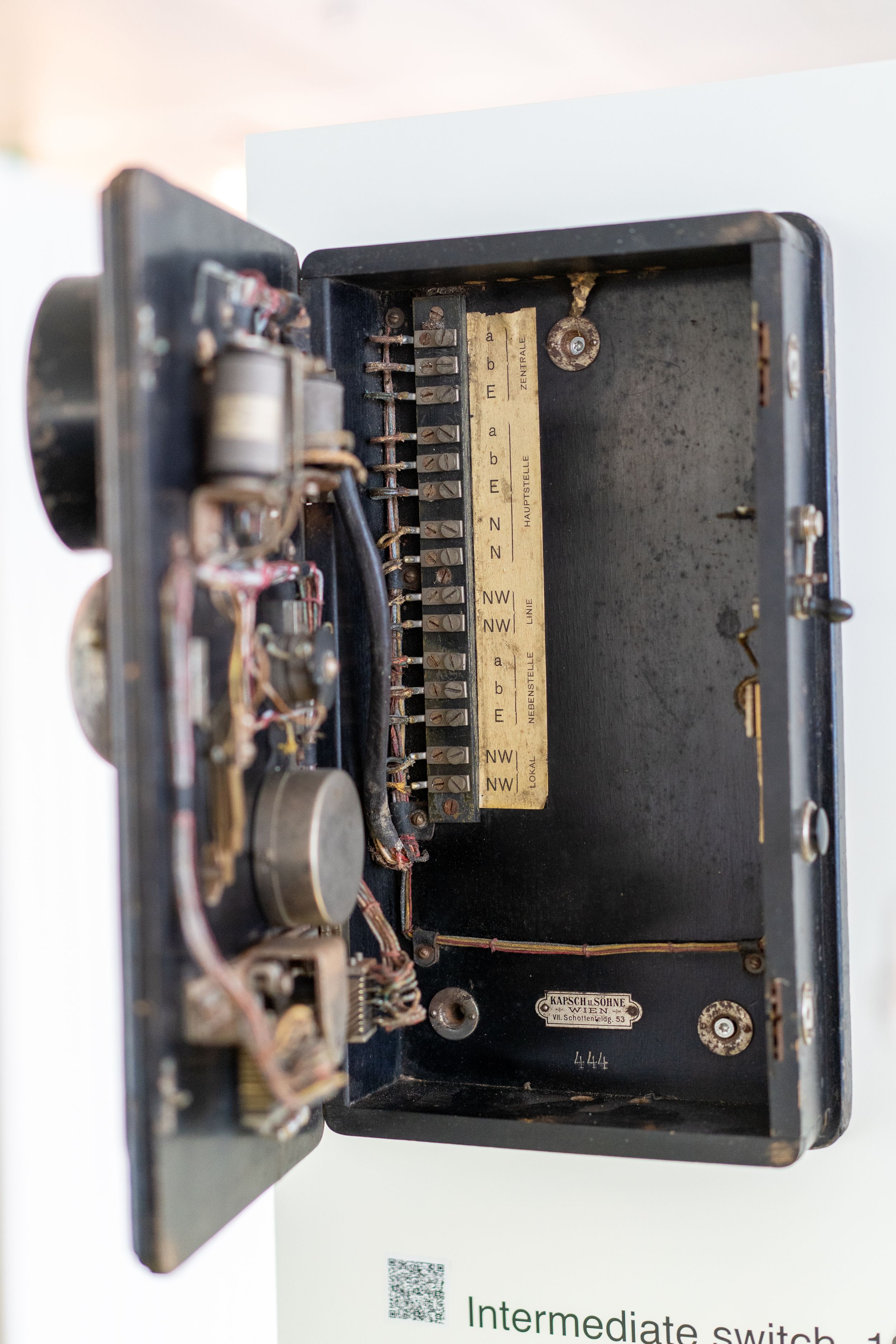
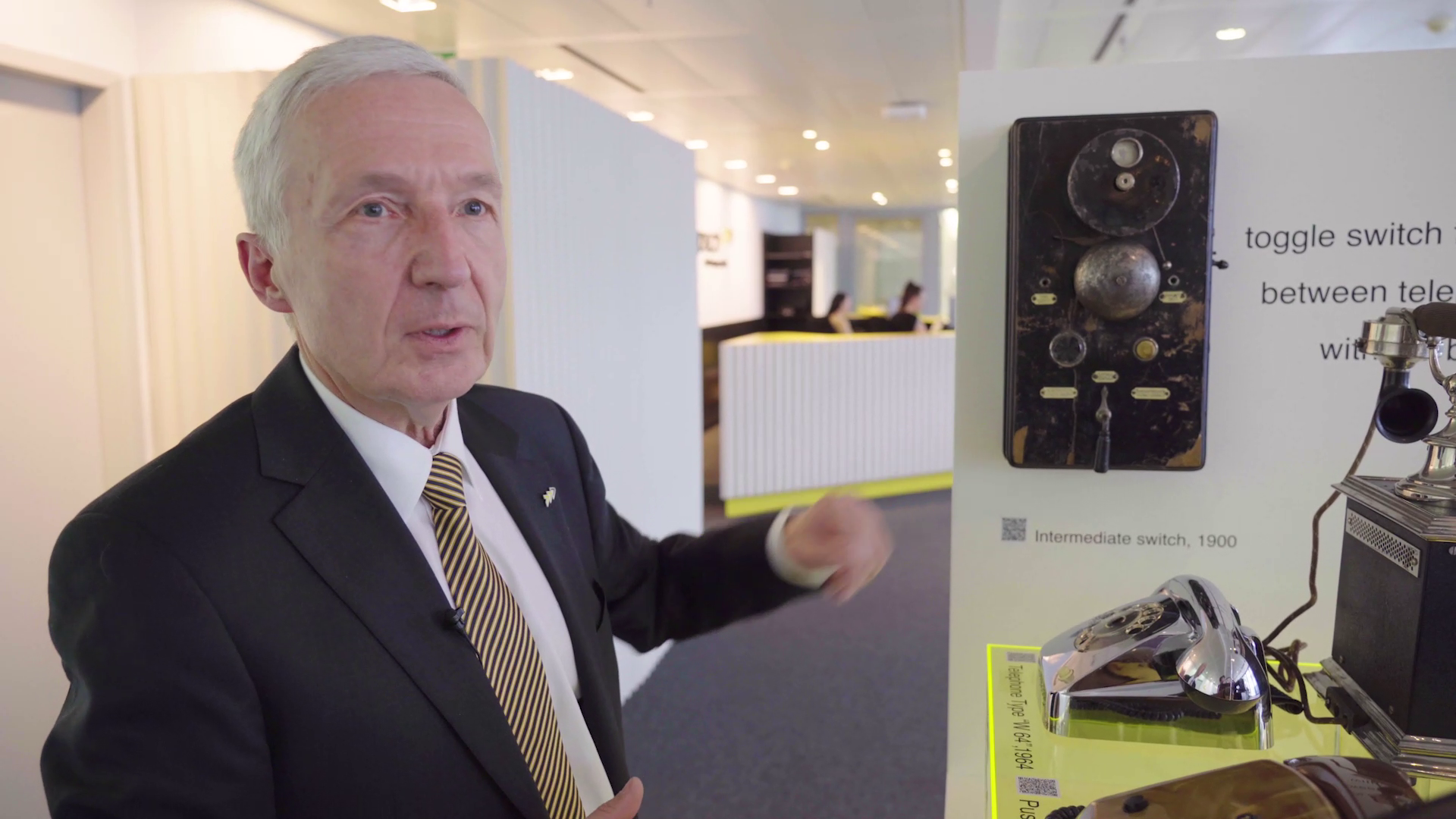
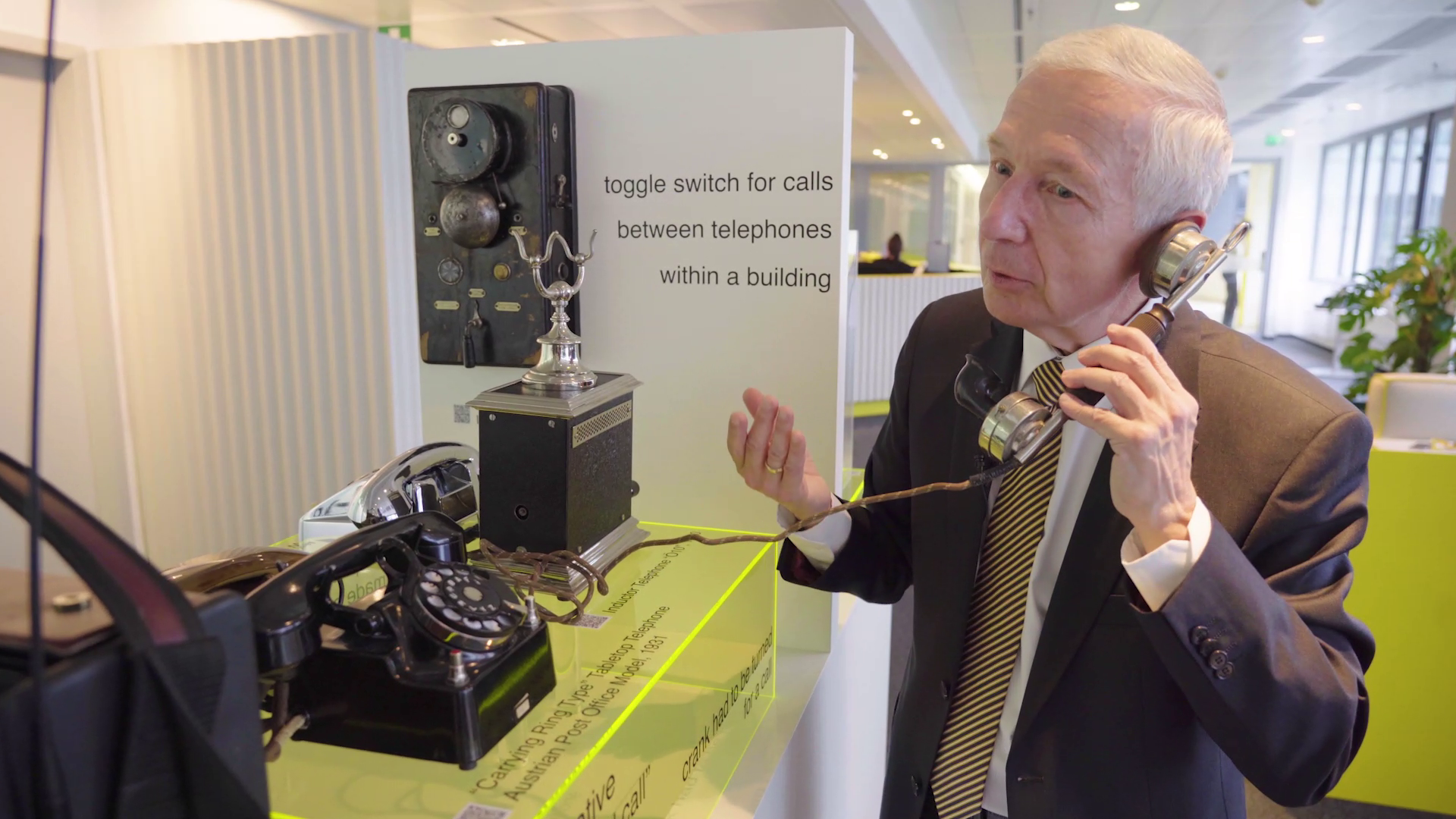
Intermediate Switch

Used to connect telephone sets within a building. Early design from the first Kapsch factory in Schottenfeldgasse.
DSC09980

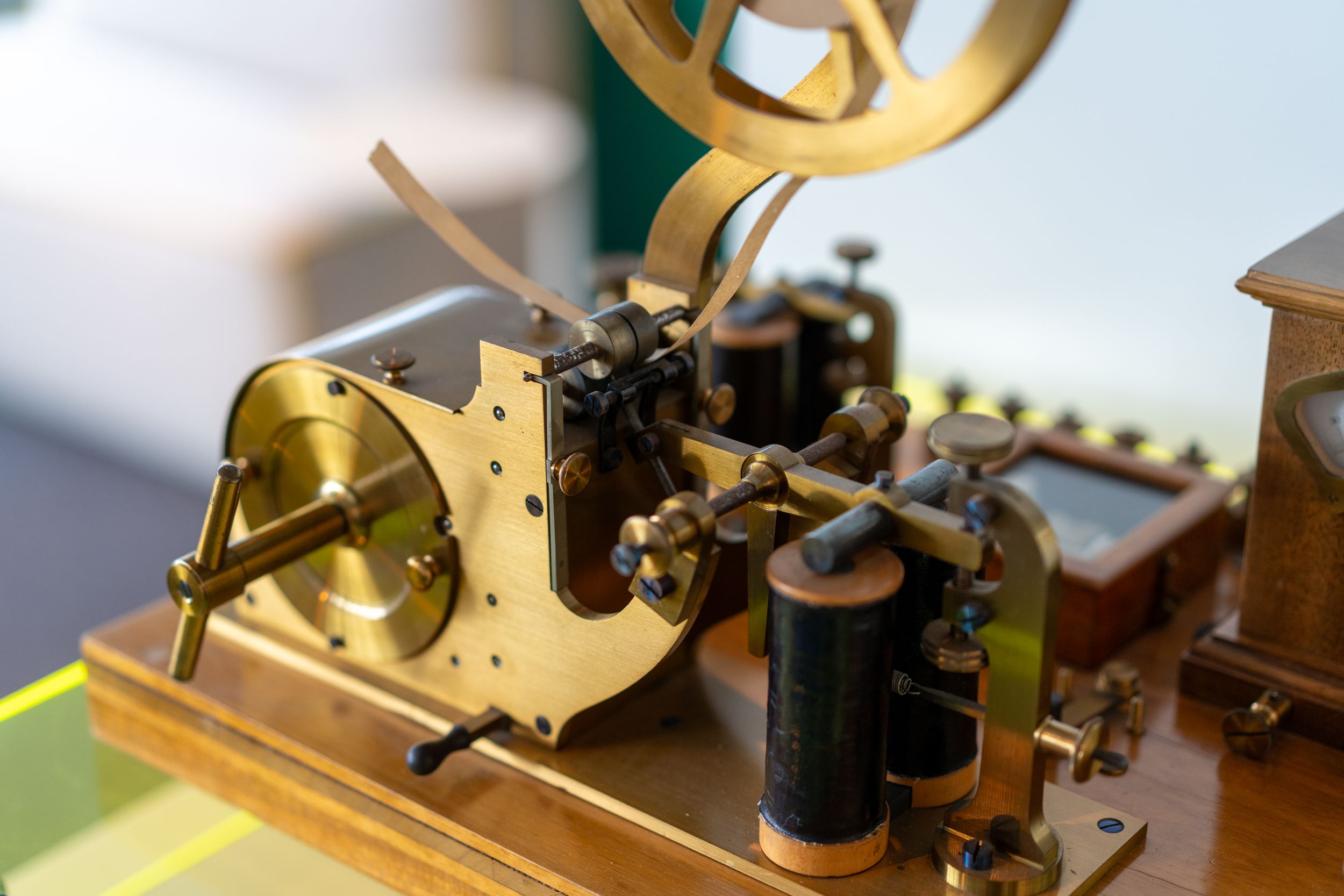
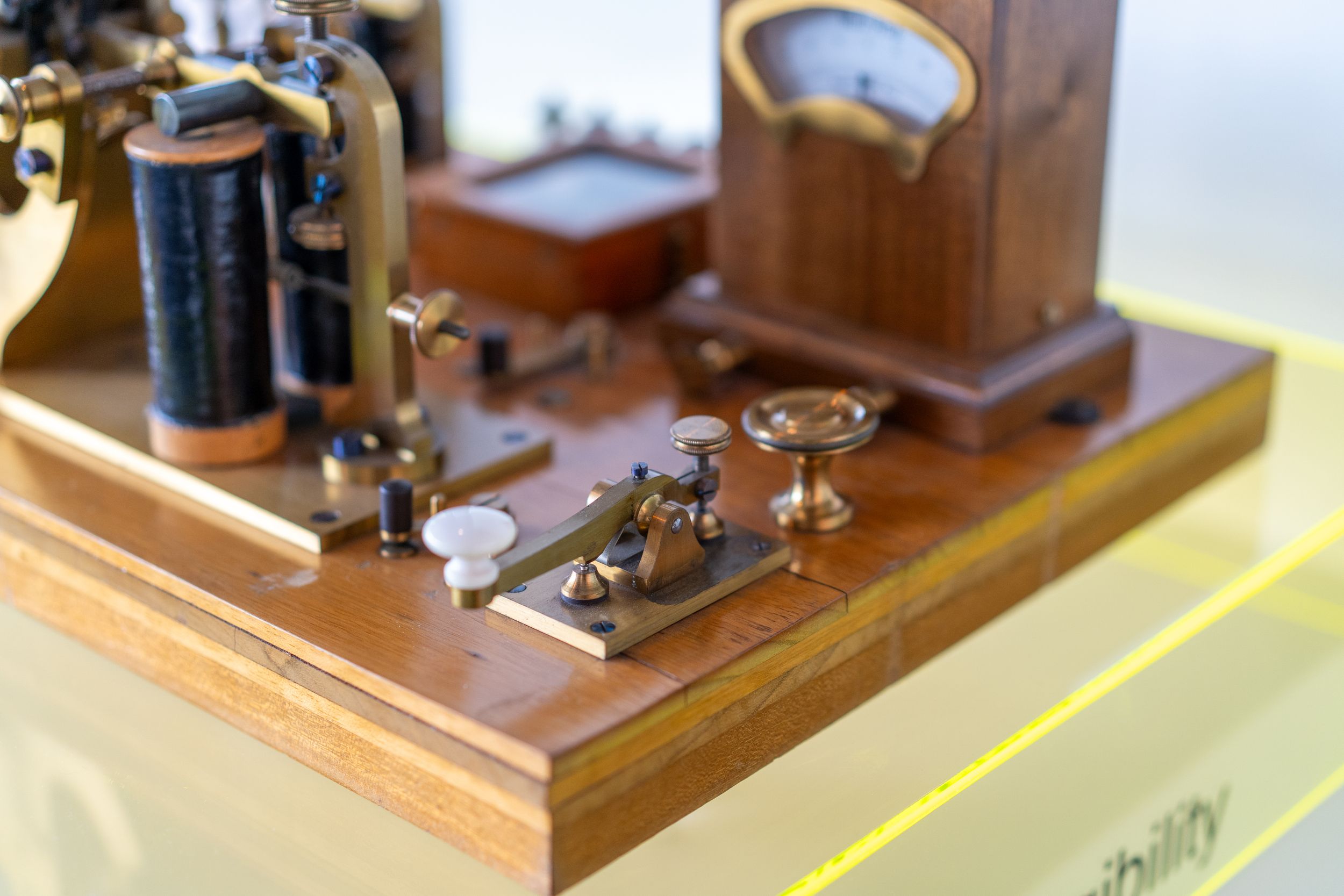
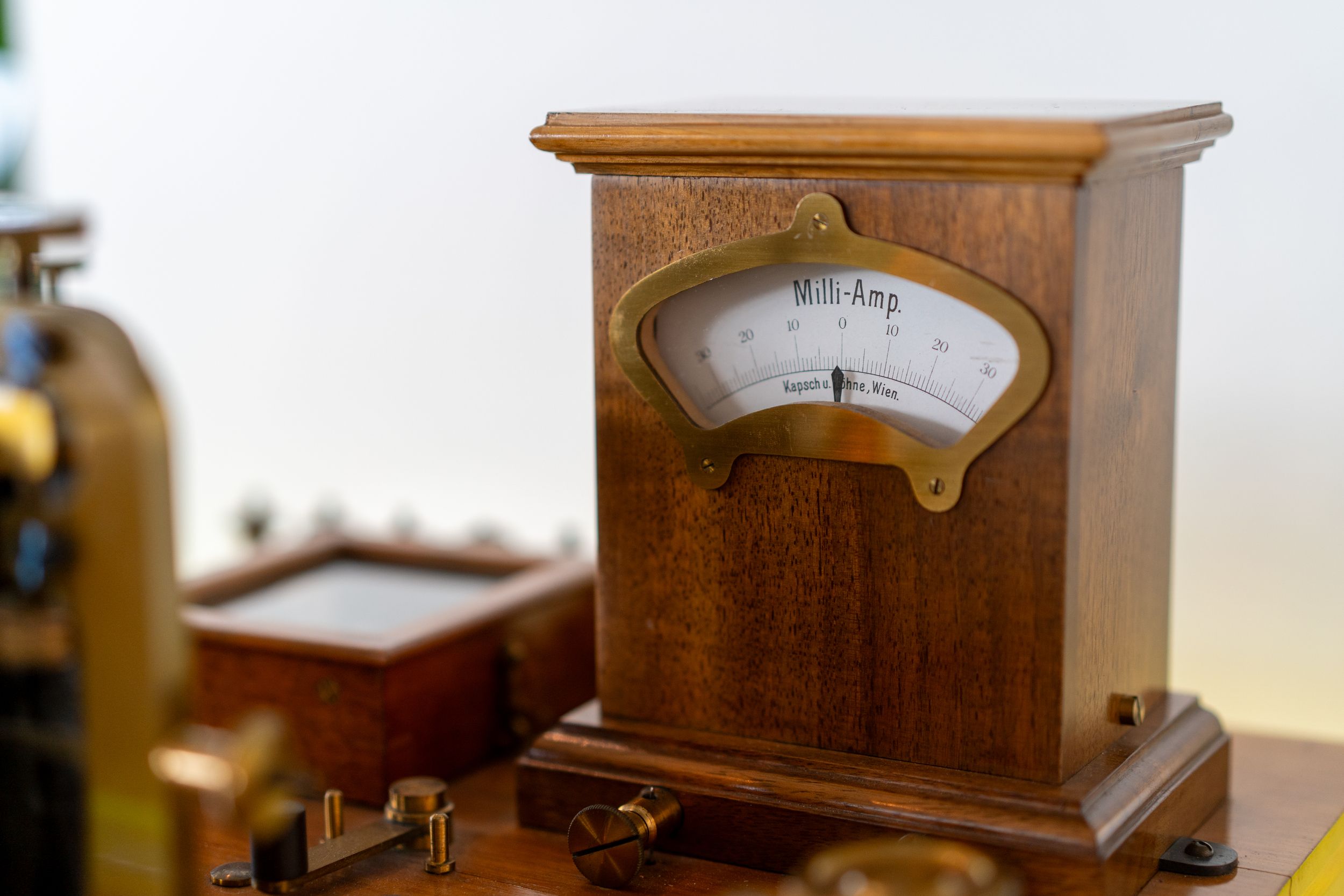
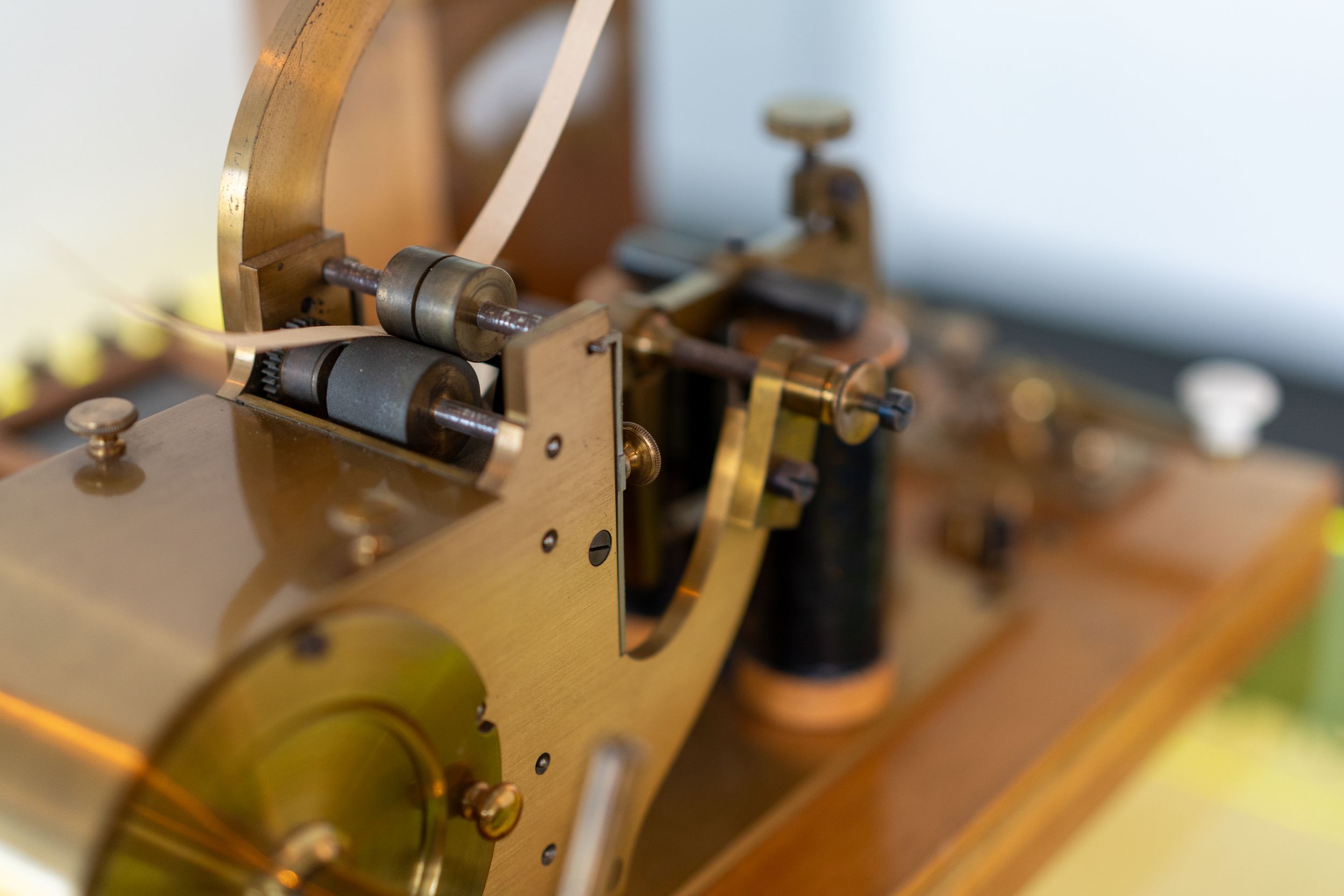
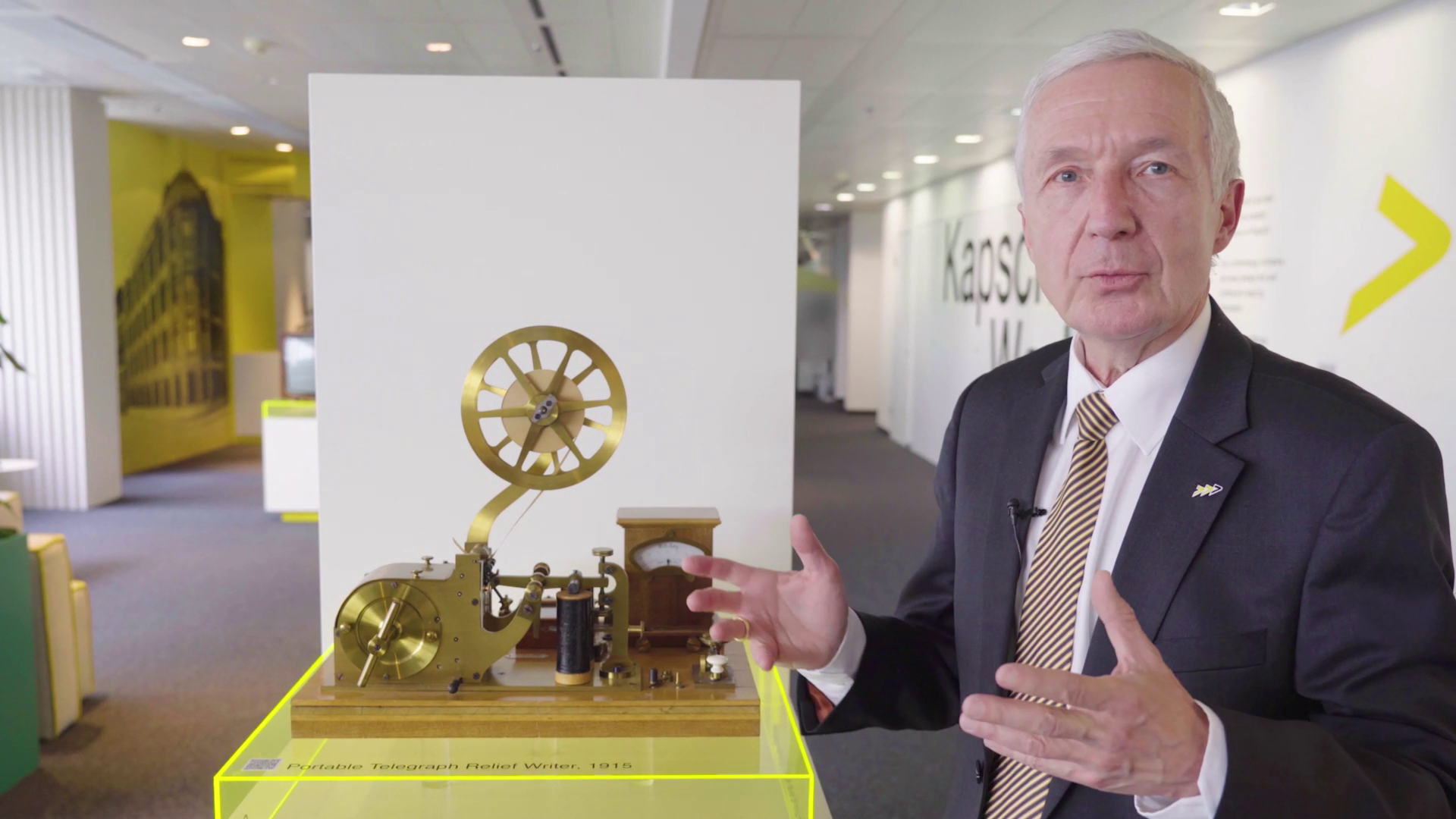
Portable Telegraph Relief Writer

The relief writer offered two advantages: first of all, all components were mounted on a panel, making the device easily transportable. Secondly, the writer left an embossment on the paper – which was especially advantageous for the military, as it allowed information to be analyzed without a light source.
DSC09962

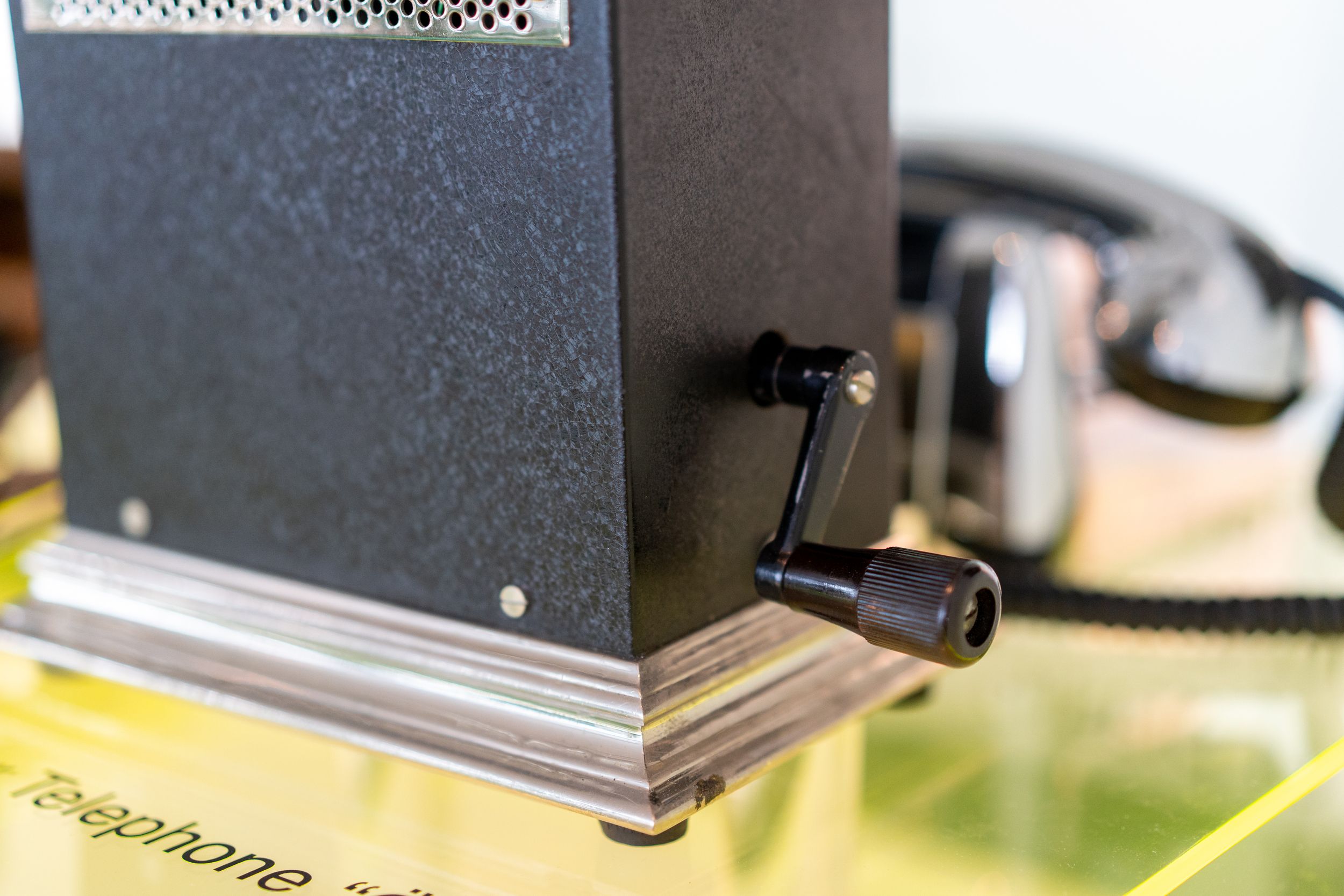
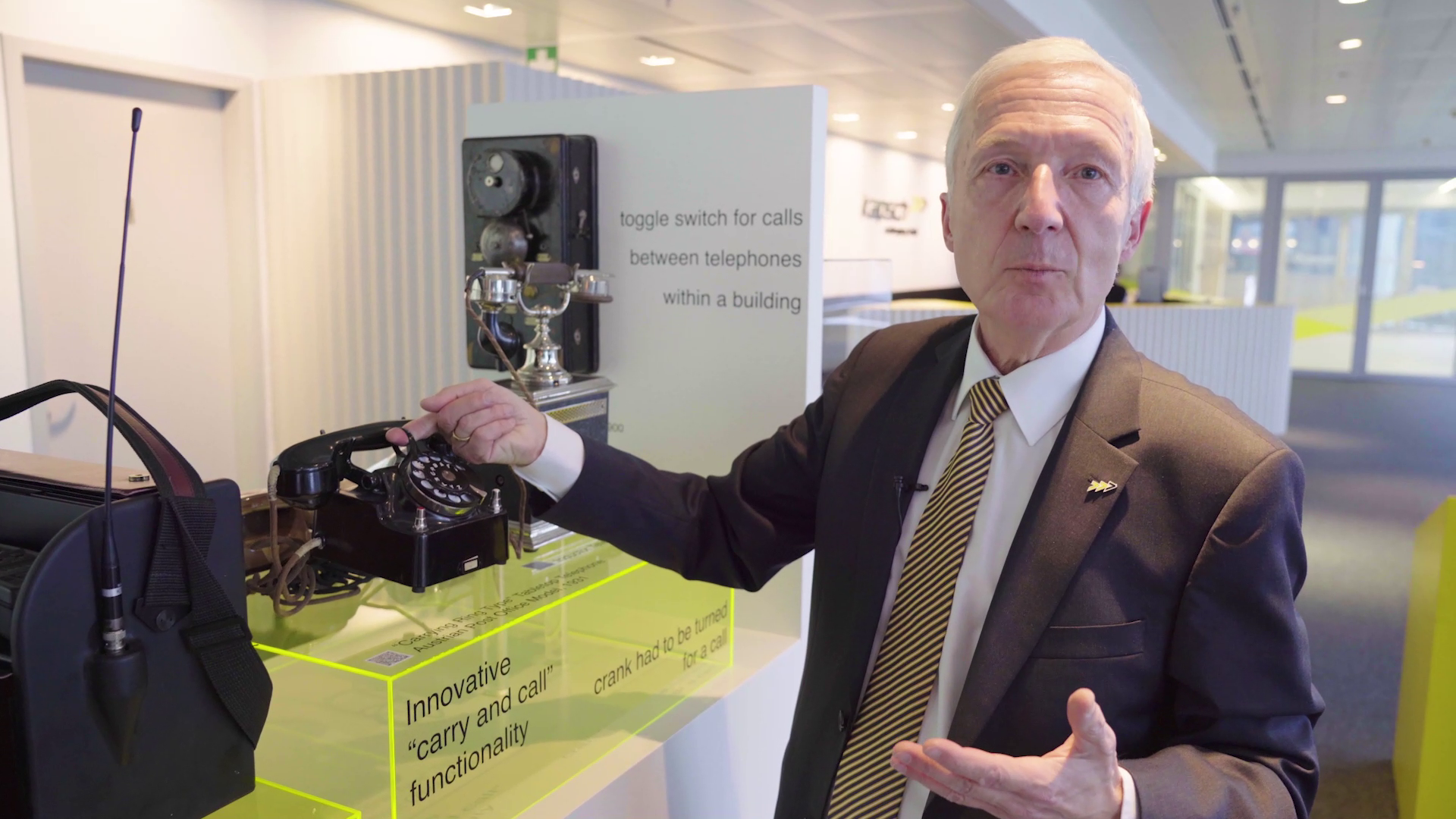
Inductor Telephone Ö10

To make a call, the crank of this telephone had to be turned. The crank moved an inductor that generated the ringing voltage. The electricity that made speech possible was supplied by batteries. 
DSC09965

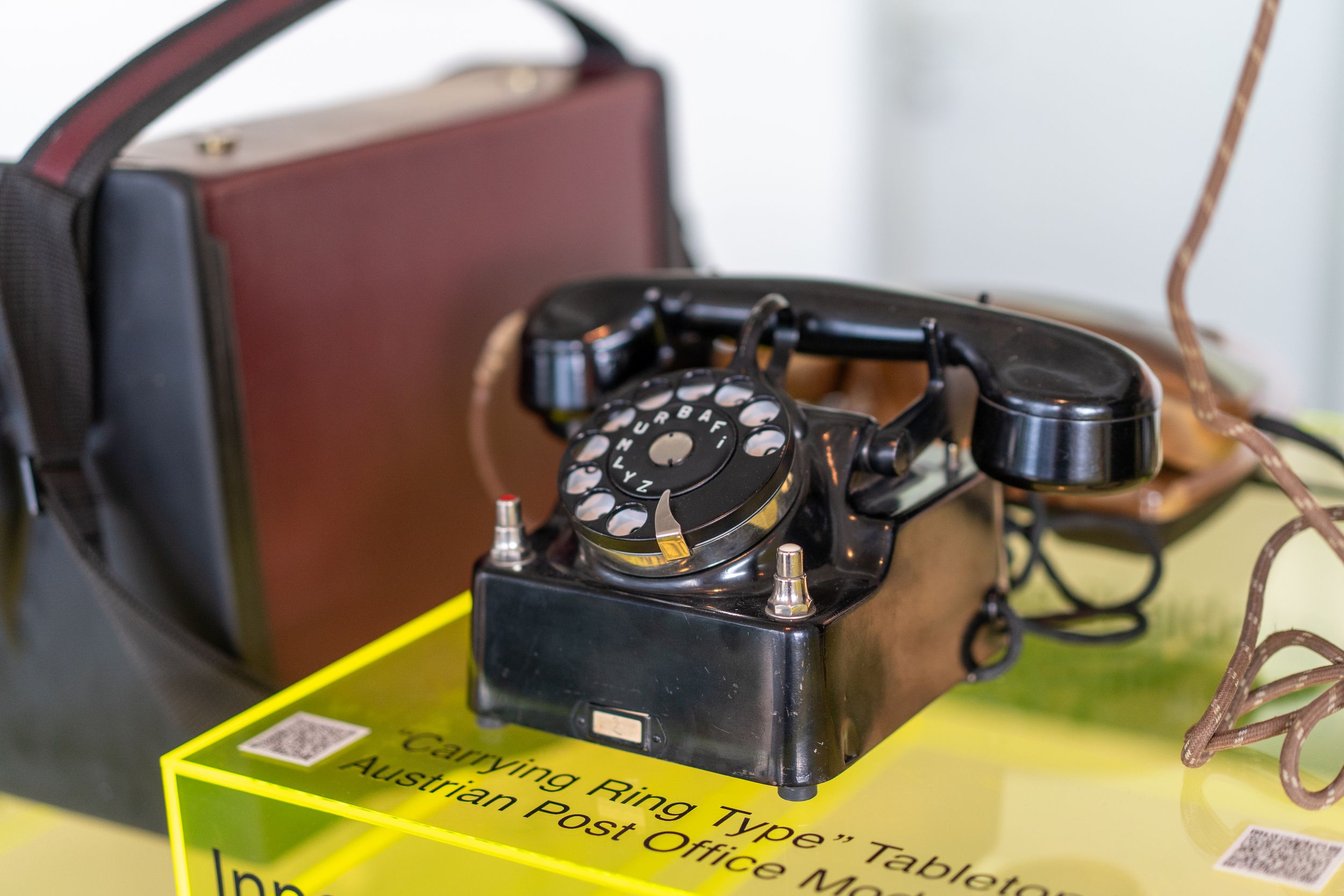
"Carrying Ring Type" Tabletop Telephone Austrian Post Office Model

This telephone was quite practical: a ring was located in the center that allowed the telephone to be lifted up with one finger. This made it possible to carry the device and make a telephone call at the same time.
DSC09997

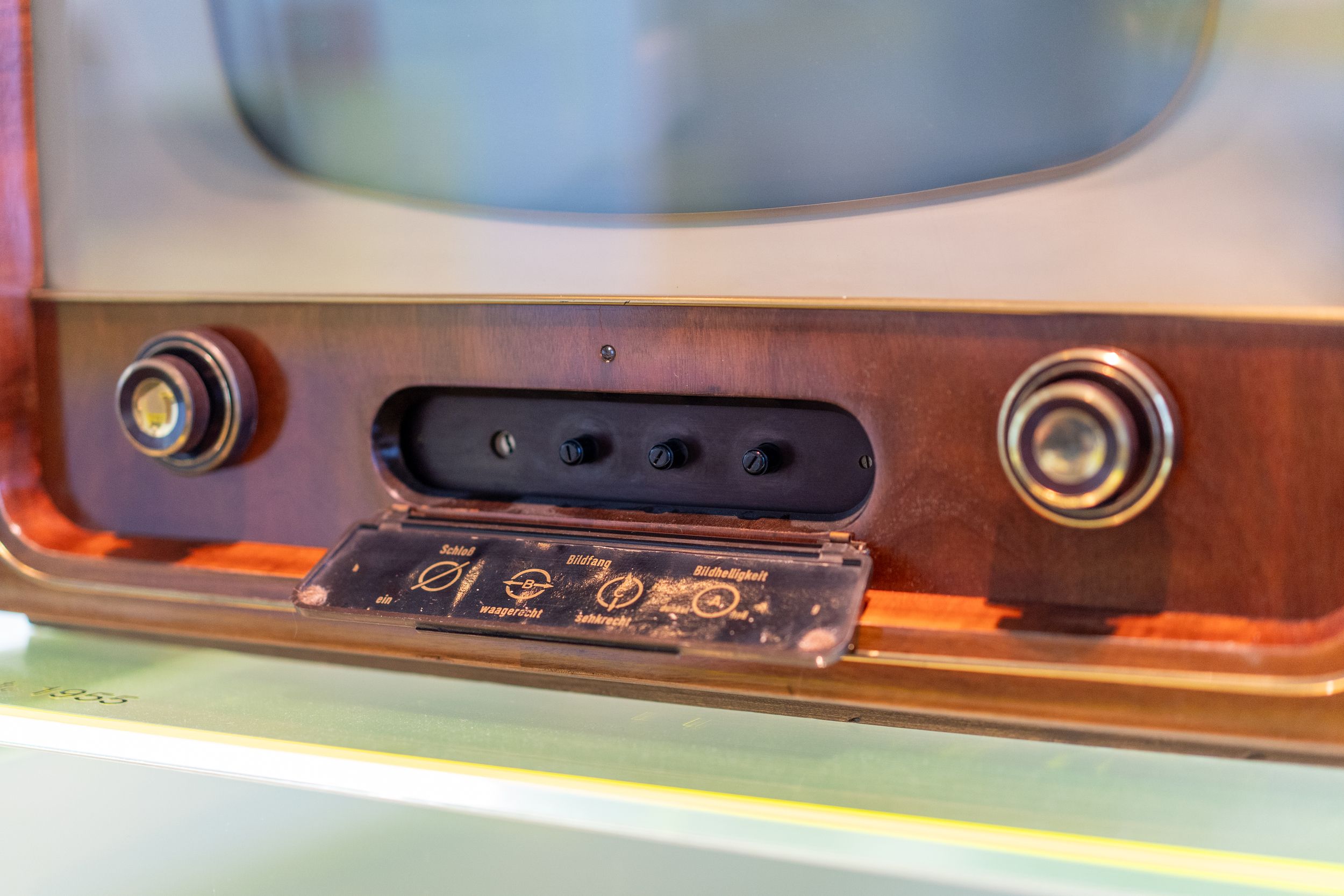
"TFS 56" Televison Set

The first television test programs were broadcast in August of 1955. The official beginning of television in Austria was the broadcast of Beethoven's Fidelio from the Vienna State Opera at the beginning of November 1955. Kapsch presented the "TFS 56" at the Autumn Trade Fair. The sales price of ATS 7,000 (Austrian Schillings) was the equivalent of about EUR 4,000 today.
DSC09992

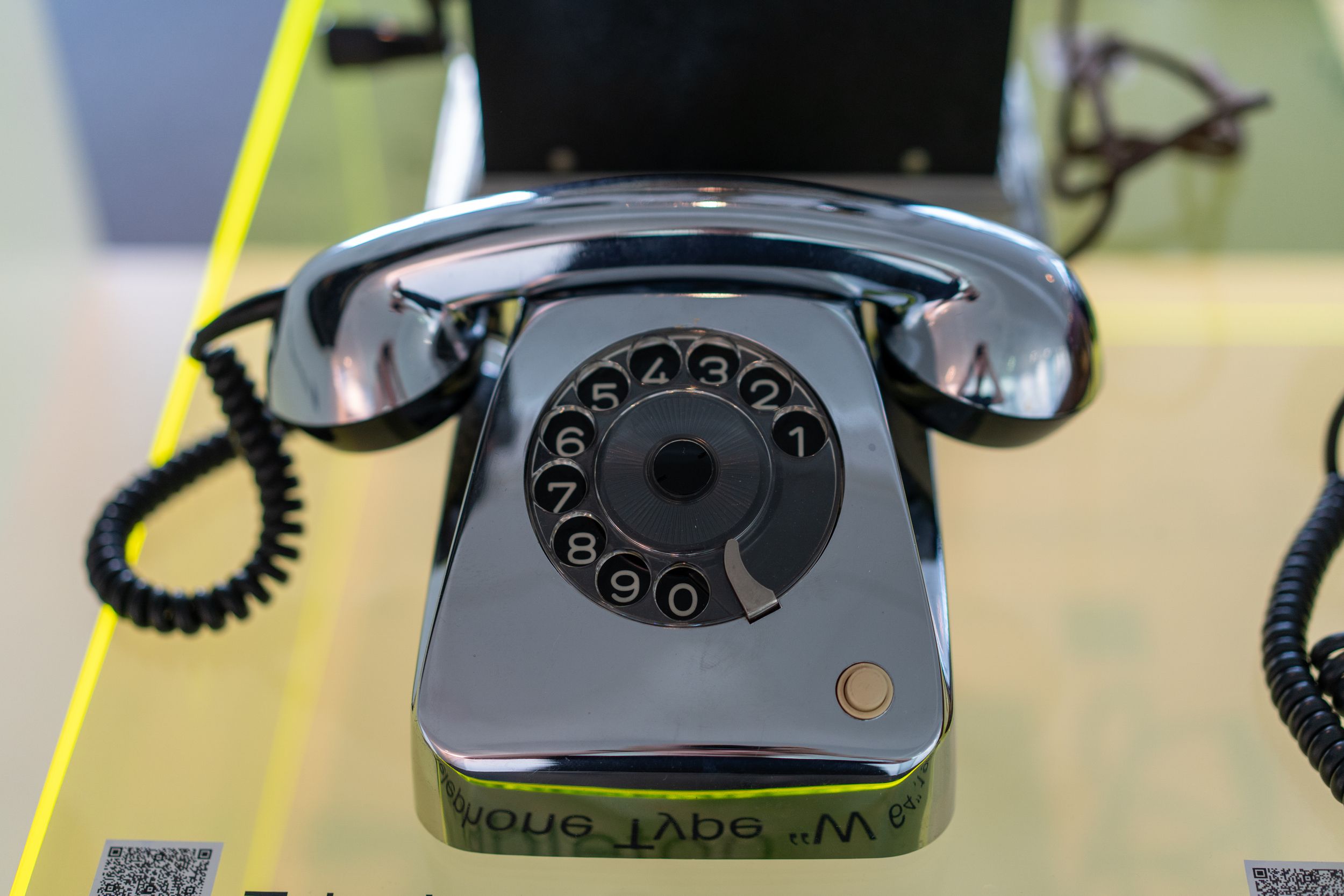
Telephone Type W 64

In 1964, production began on the first plastic desktop telephone. This telephone had a printed circuit board instead of a purely wired circuit.
DSC09993

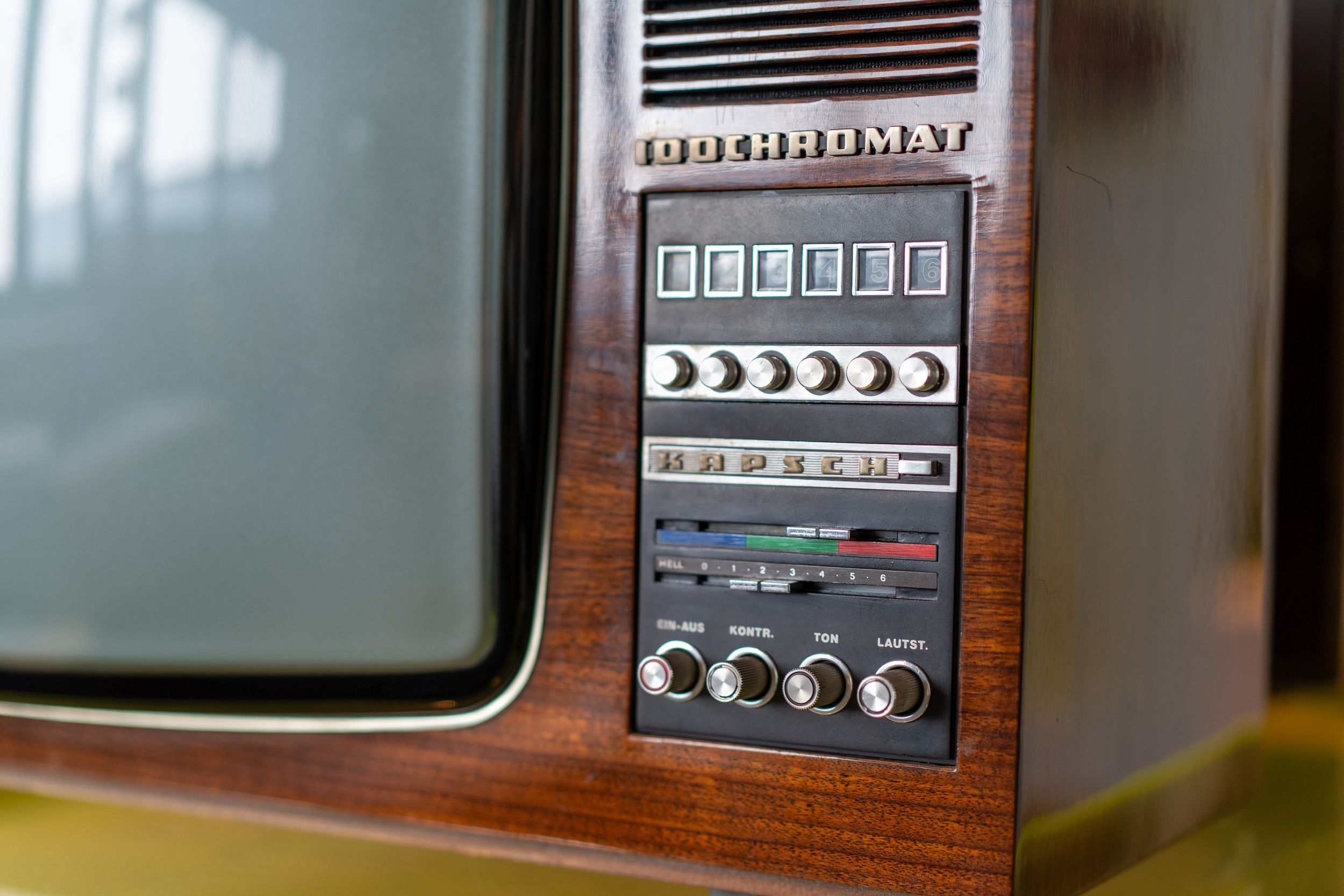
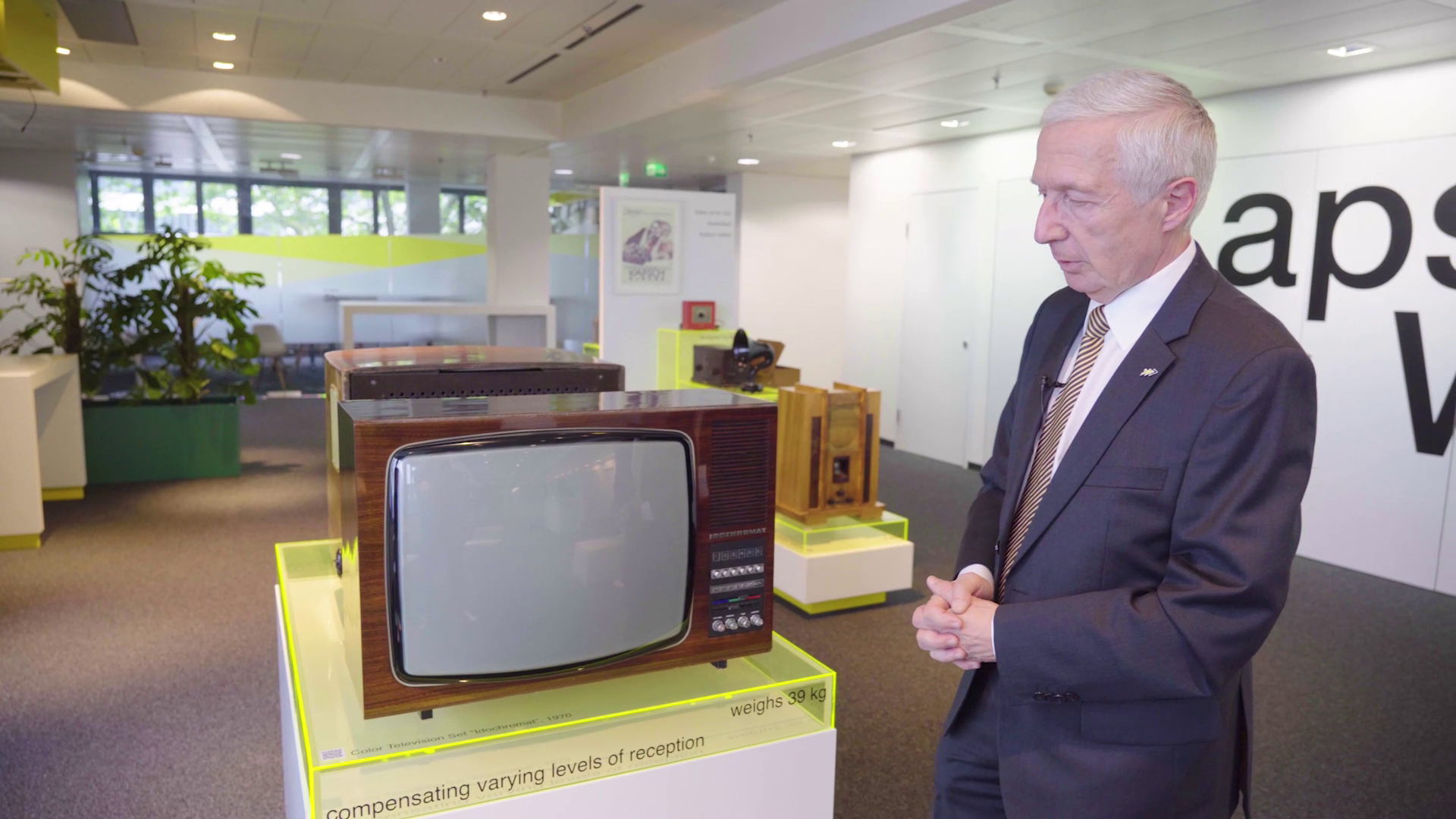
Color Television Set "Idochromat"

This television set was developed specifically for the Austrian market. The focus was on overcoming the difficult reception conditions in Austria. Therefore, particular emphasis was placed on highly effective synchronous devices for image stabilization. The television set weighs 39 kg. 
DSC00051

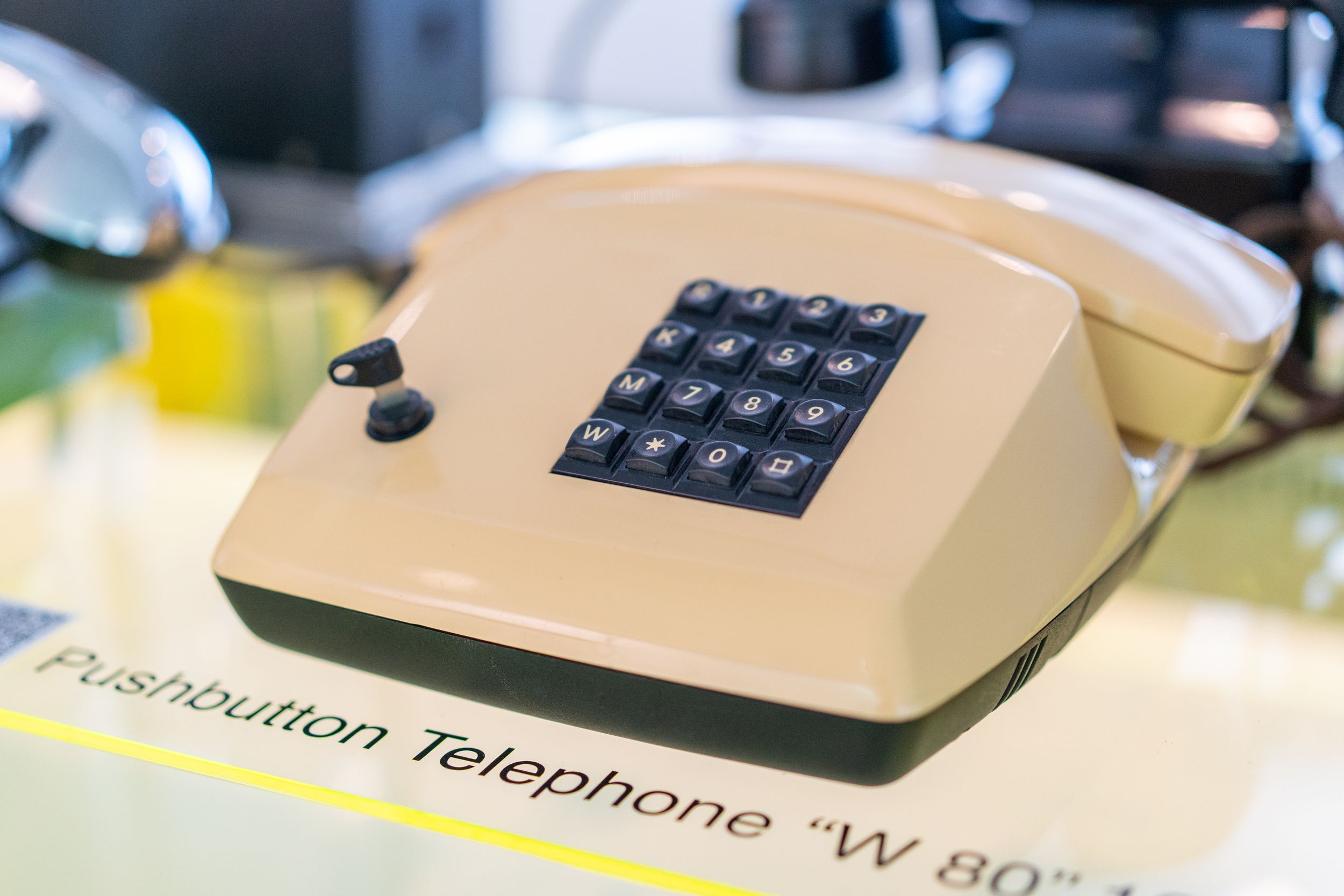
Pushbutton Telephone W 80

The assortment of telephone sets became much more colorful in the 1980s. The W80 telephone was available in eight different colors: chamois, sand, yellow, orange, dark red, blue, moss green, and dark brown.
DSC09966

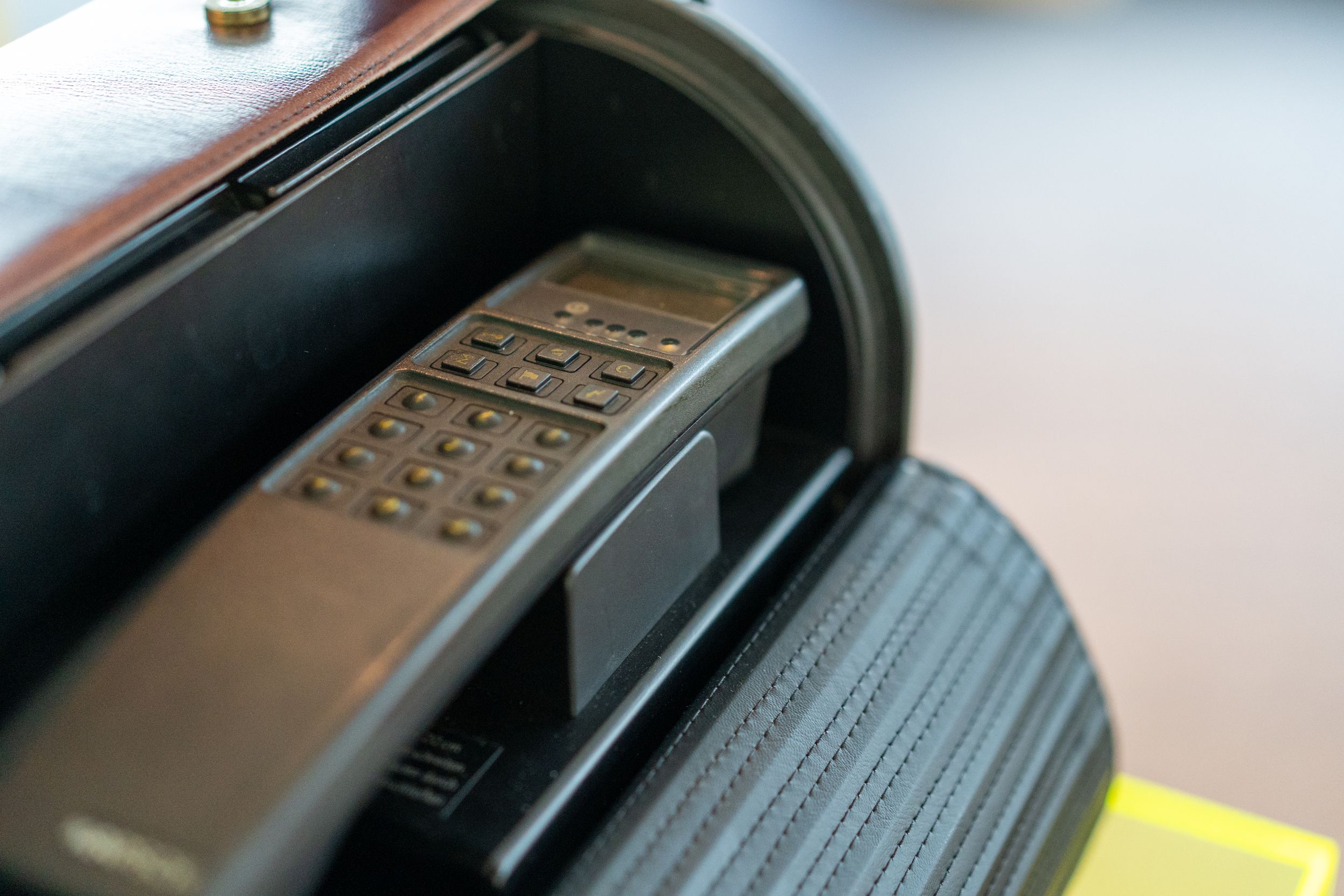
Mobile Telephone "Mobilstar", AT C90

"MobilStar" was designed for operations using the C-network; it featured a memory capacity for 100 telephone numbers. The power supply was also located in the leather carry bag. In total, the mobile telephone weighed 11 kg – as much as 40 modern smartphones combined. It was produced at the factory in Fürstenfeld.